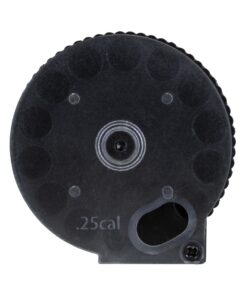
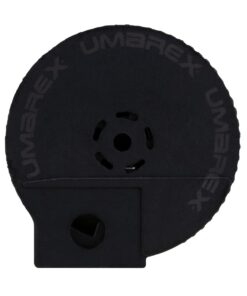
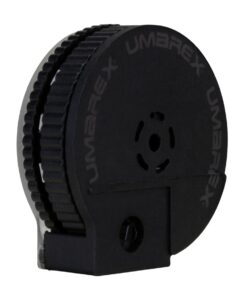
Umarex Outpost

€318.96
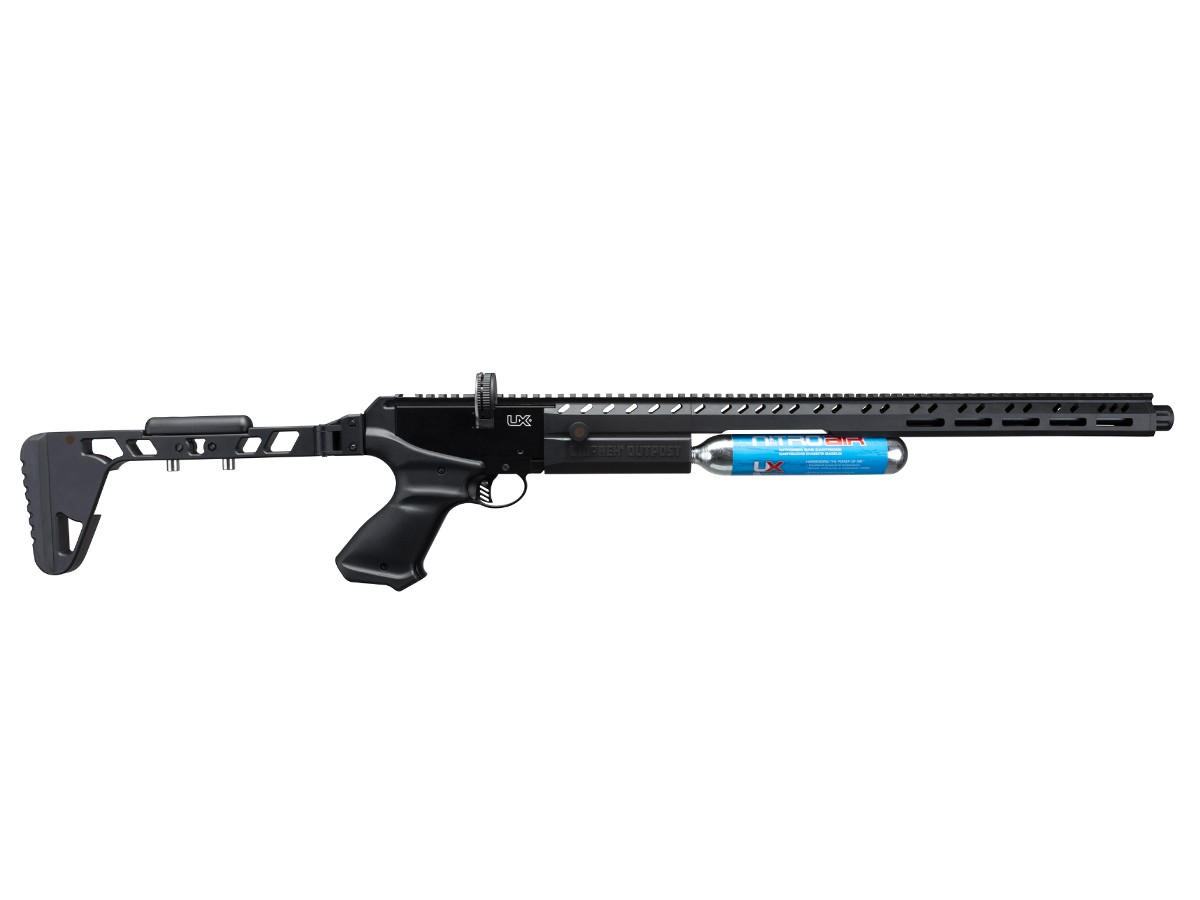
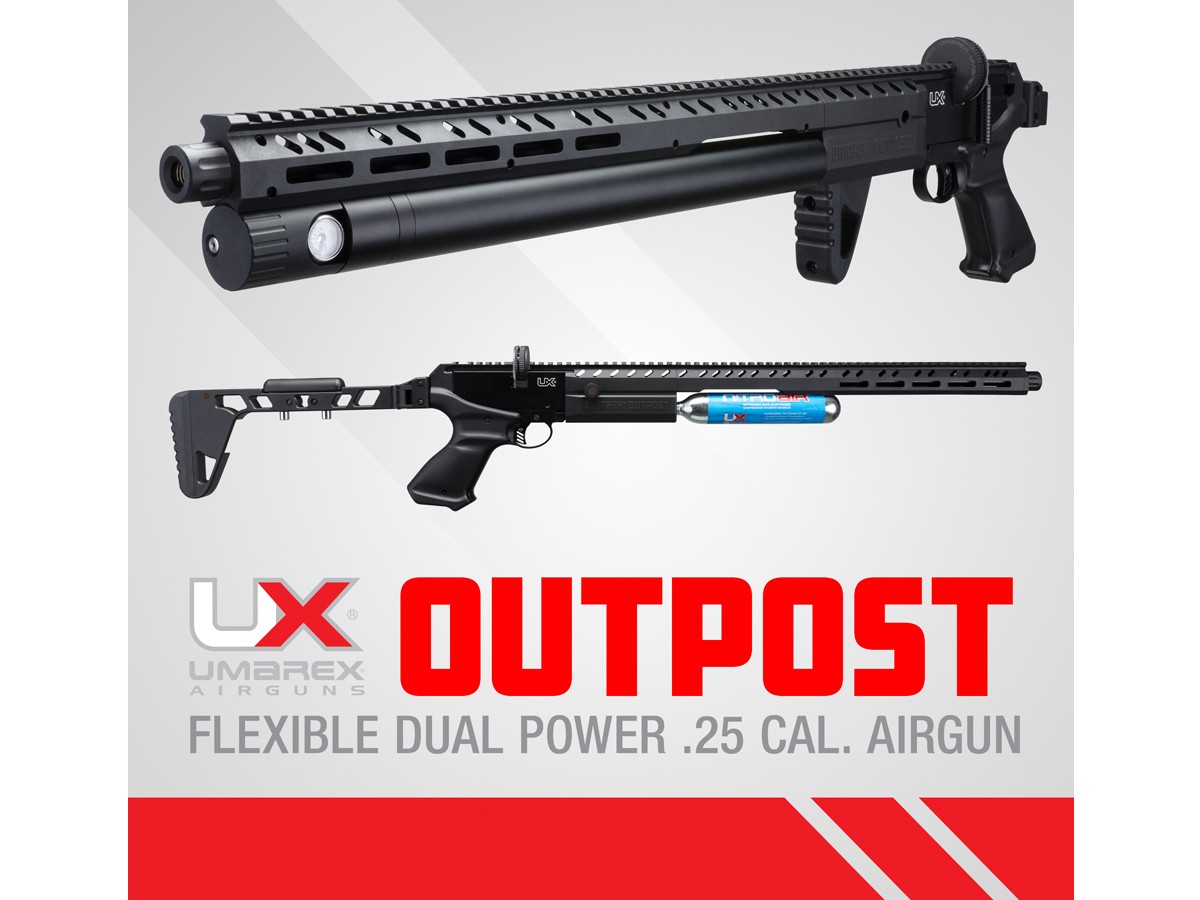
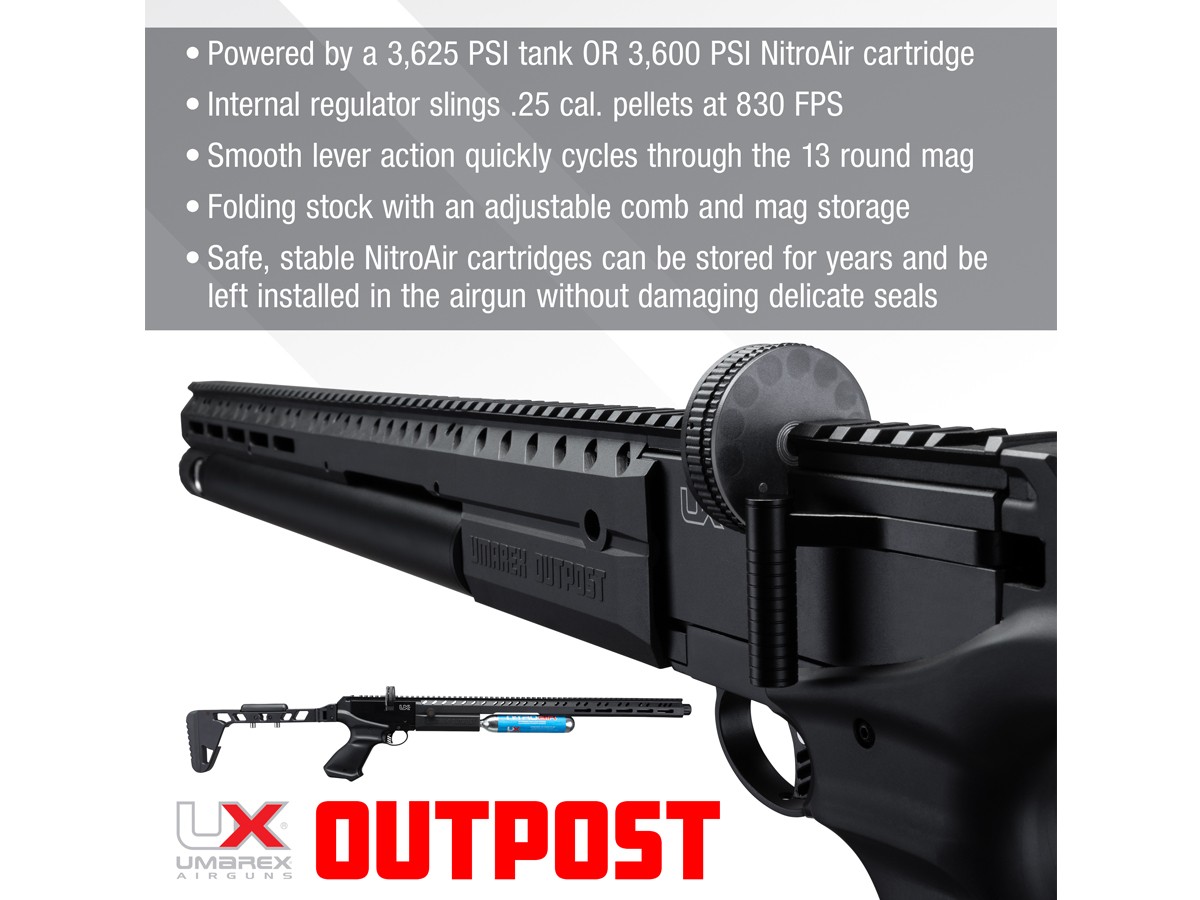
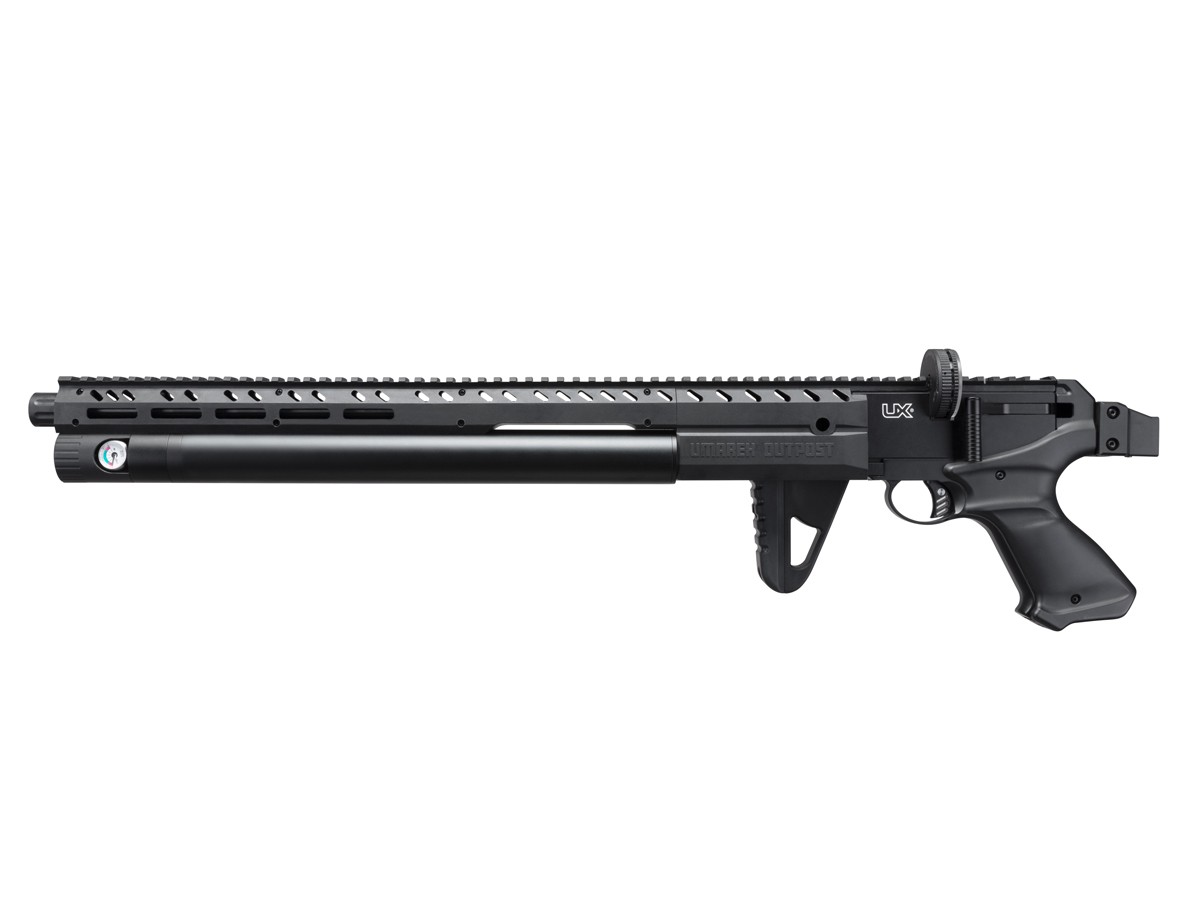
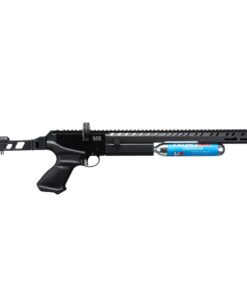
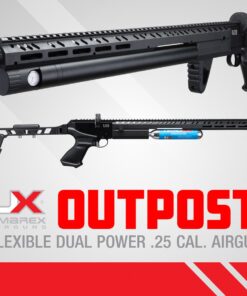
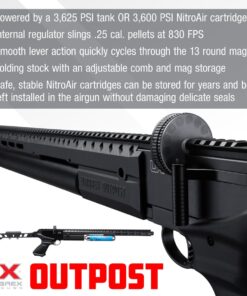
The Umarex Outpost gives you a NitroAir PCP air rifle that’s easy to maneuver, with smart features focused on convenience and high performance. You’ll like that you get speeds up to 830 fps and power up to 38 fpe, both with 24 grain pellets, which gives you the performance you need for pesting, plinking, and small game hunting.
You’ll appreciate that you can use either the included innovative NCR NitroAir nitrogen cartridges to get performance you can count on in any weather because it’s not affected by temperature as much as CO2, or the included 250cc PCP tank that fills to 3,625 psi to give you the same experience and performance as a standard PCP air rifle. You’ll also enjoy that each shot leaves the barrel with the same predictable performance, thanks to the steady speeds produced by the internal regulator set to 1,800 psi.
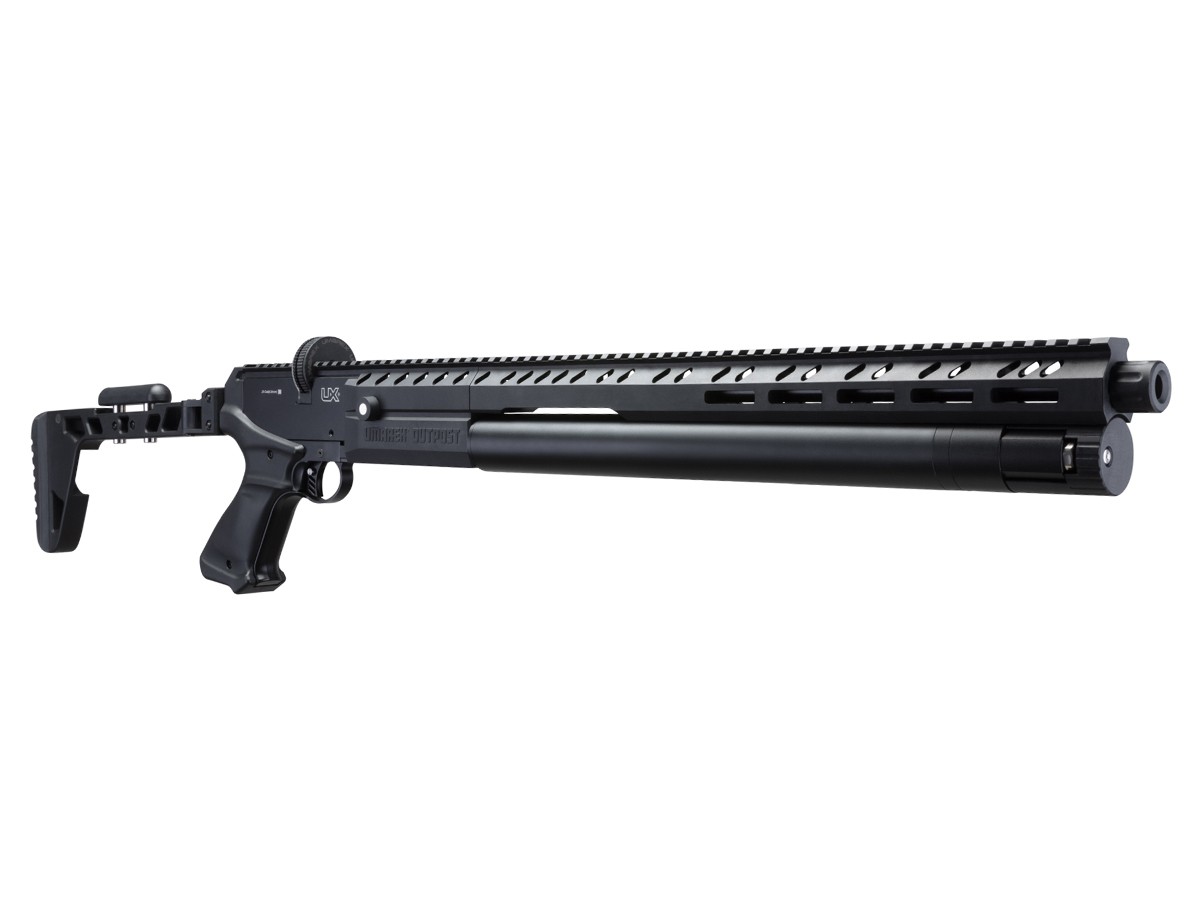
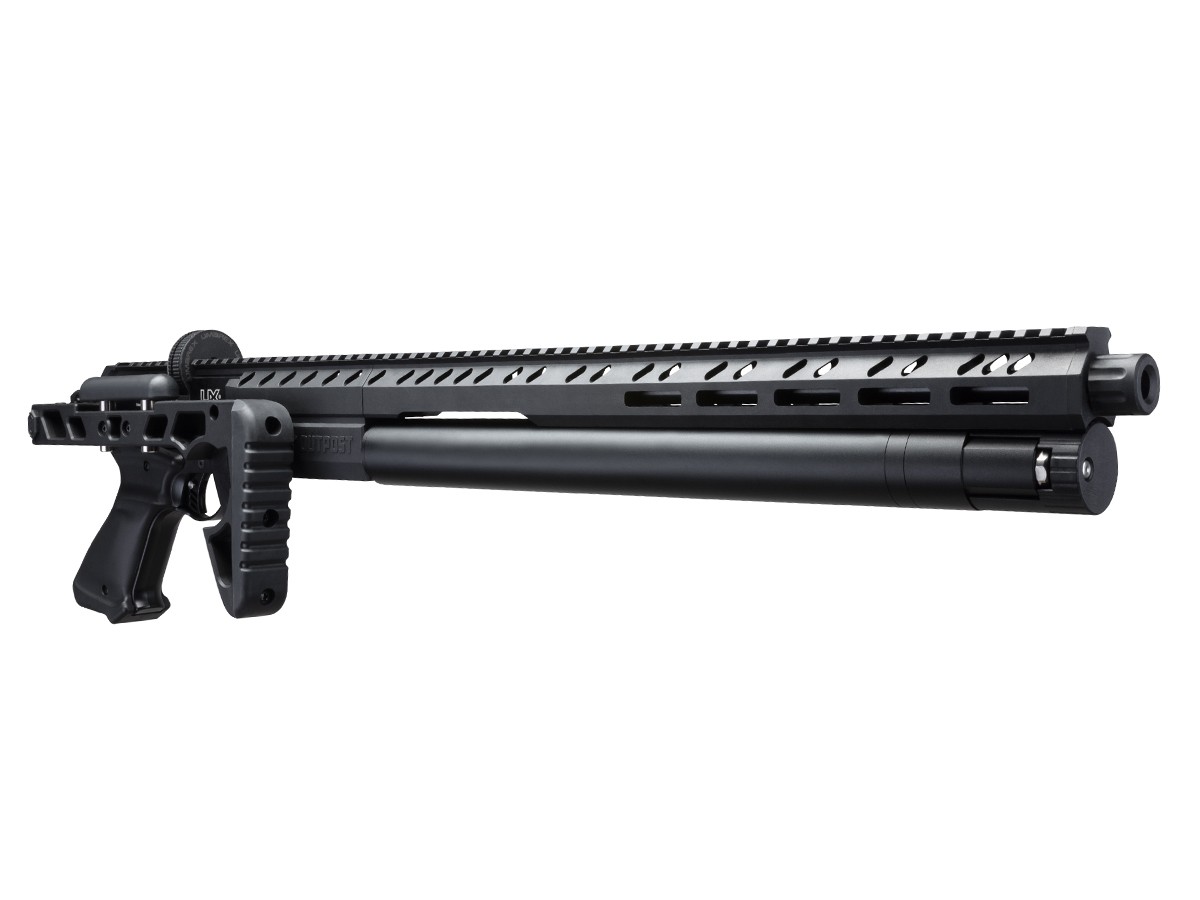
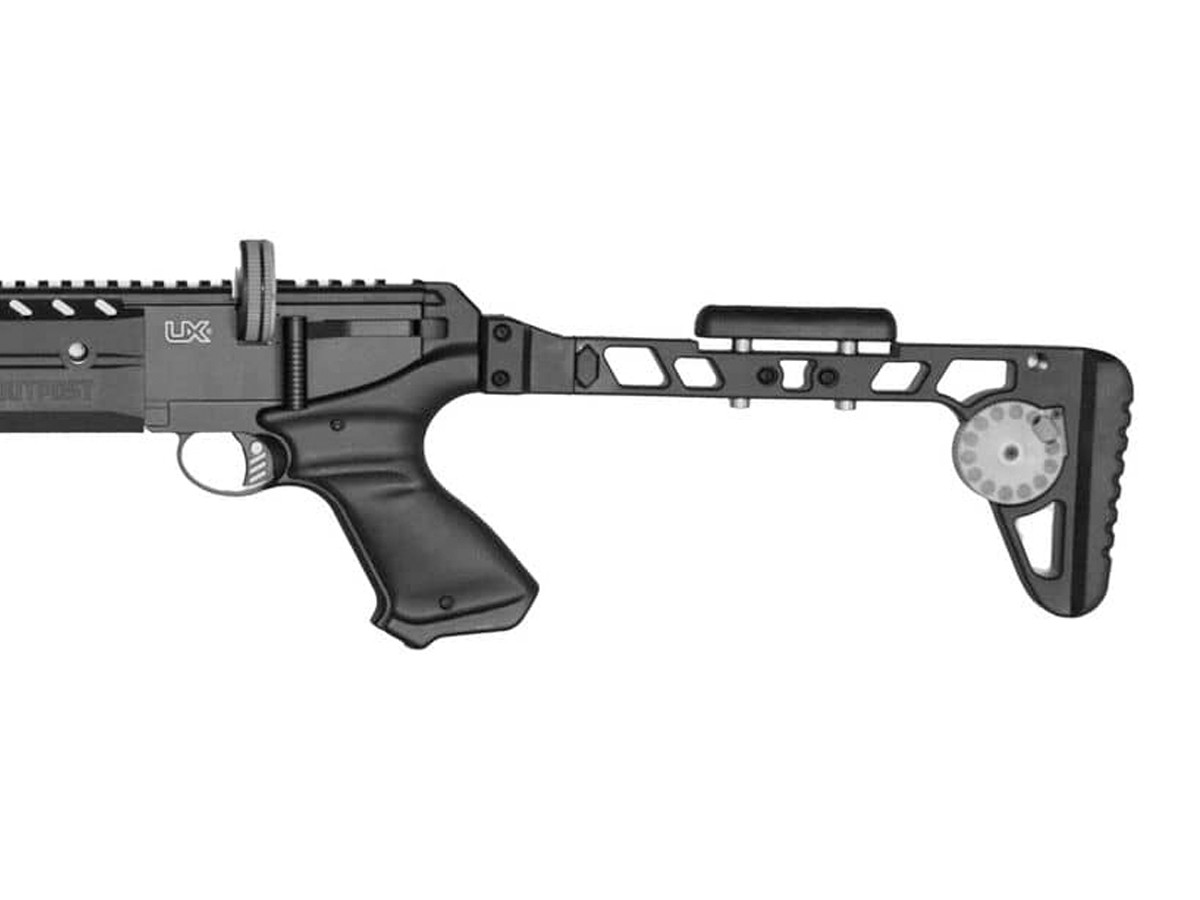
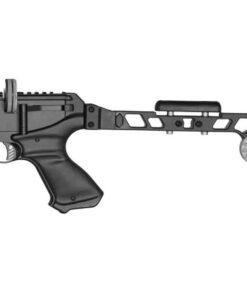
The Umarex Outpost gives you convenience and portability because it has a folding buttstock with a ridged rubber buttpad, and it also has storage for an extra magazine (two total are included) in the buttstock, plus a cheek rest you can adjust for height. This gives you an easier way to carry it through dense woods, and it also makes it easier to fit inside a rifle case when folded.
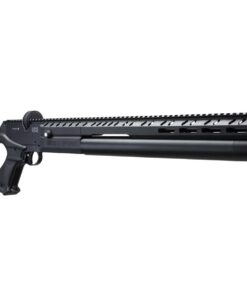
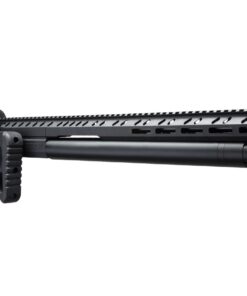
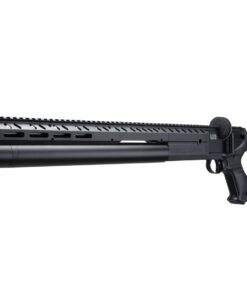
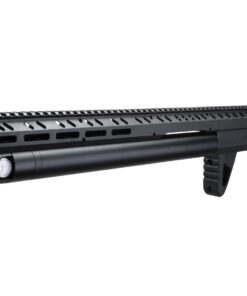
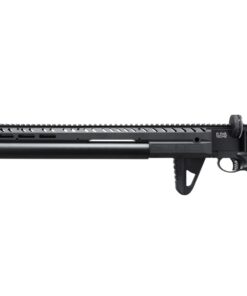
This air rifle gives you accurate aiming when you add your favorite scope to its extended Picatinny scope rail, and it lets you securely add accessories like lights and lasers to the M-LOK slots on both sides of the handguard. If you’re in the market for a dual power NitroAir PCP air rifle with an internal regulator for precise and powerful shots, get the Umarex Outpost now at Airgun Depot.
Umarex Outpost Features:
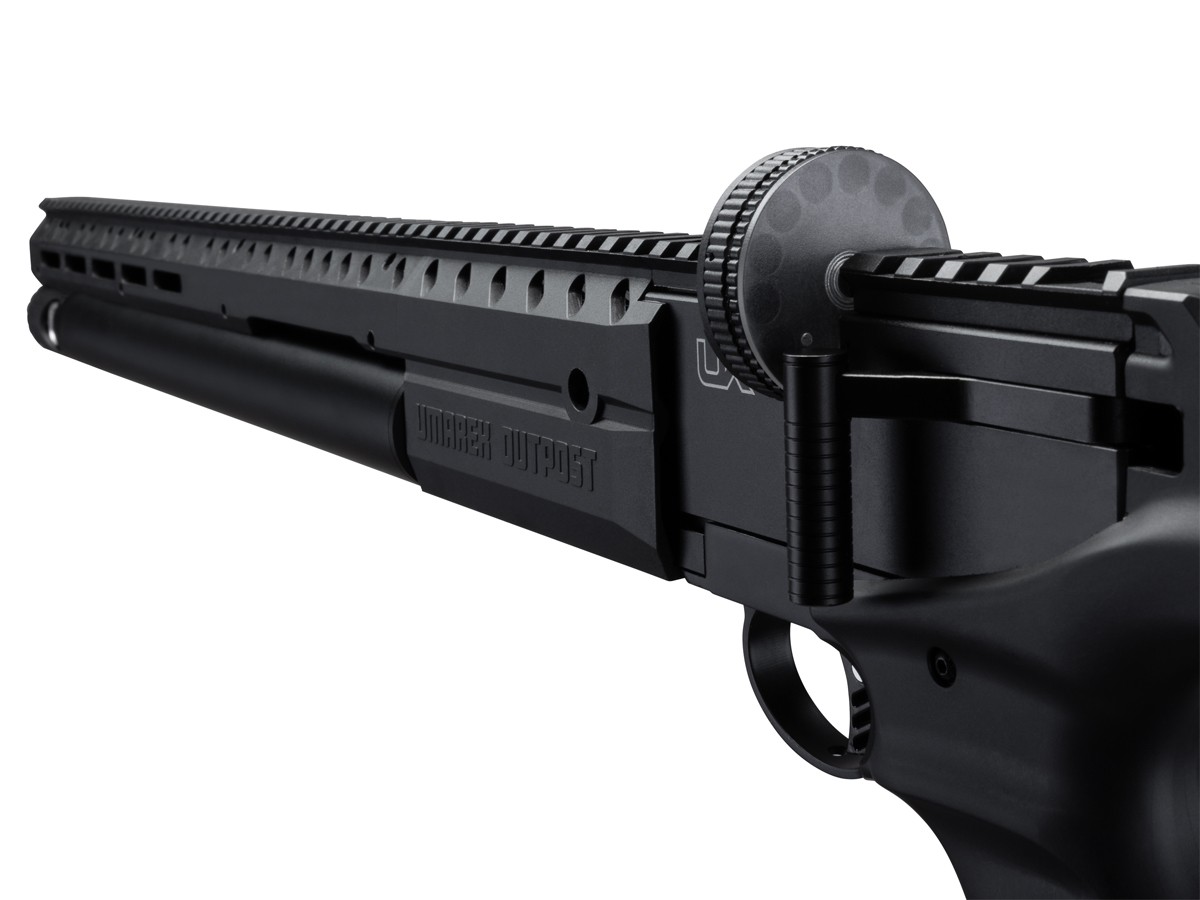
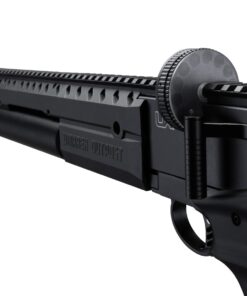
- Sidelever
- Unique NCR system with NitroAir recyclable/disposable nitrogen cartridge
- Dual power system can also use included 3,625 psi tank
- Includes 250cc PCP air cylinder
- Uses .25 caliber pellets
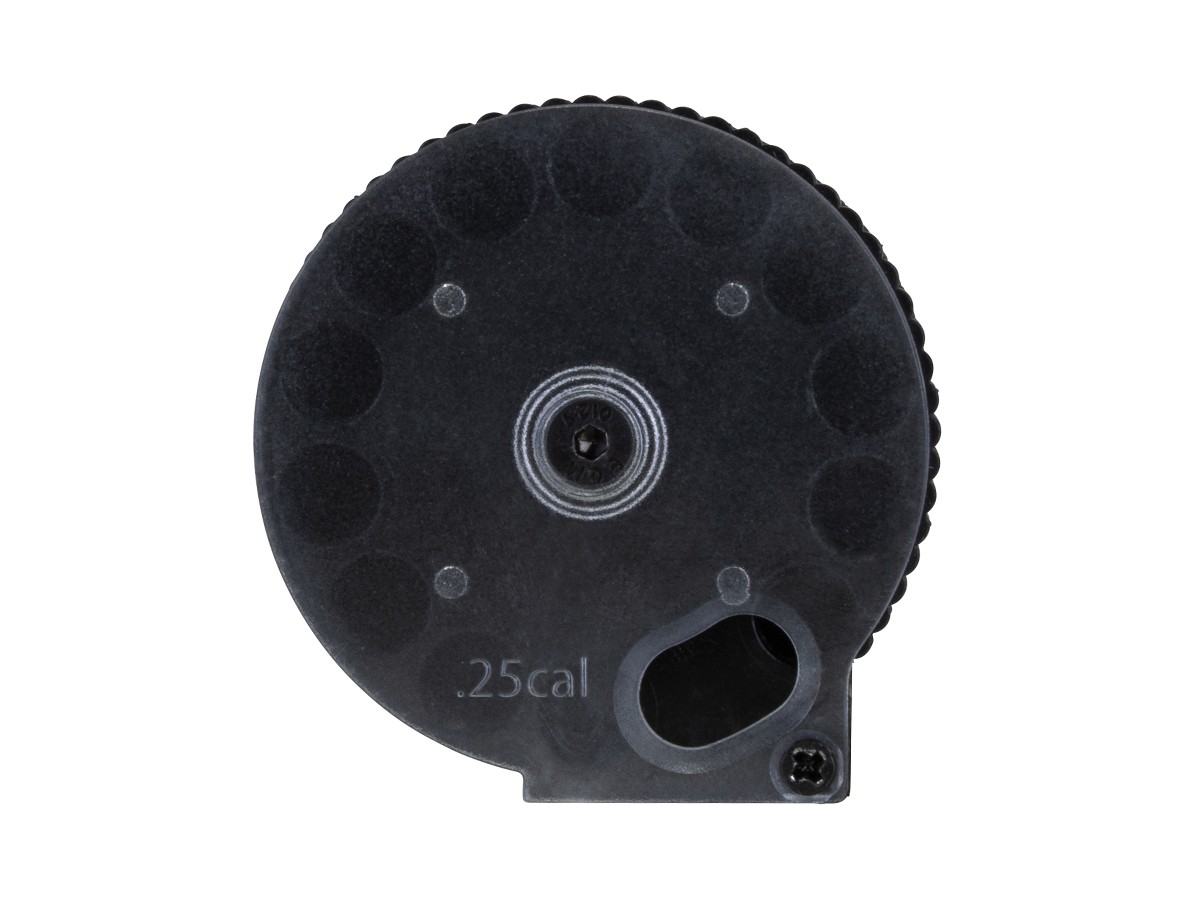
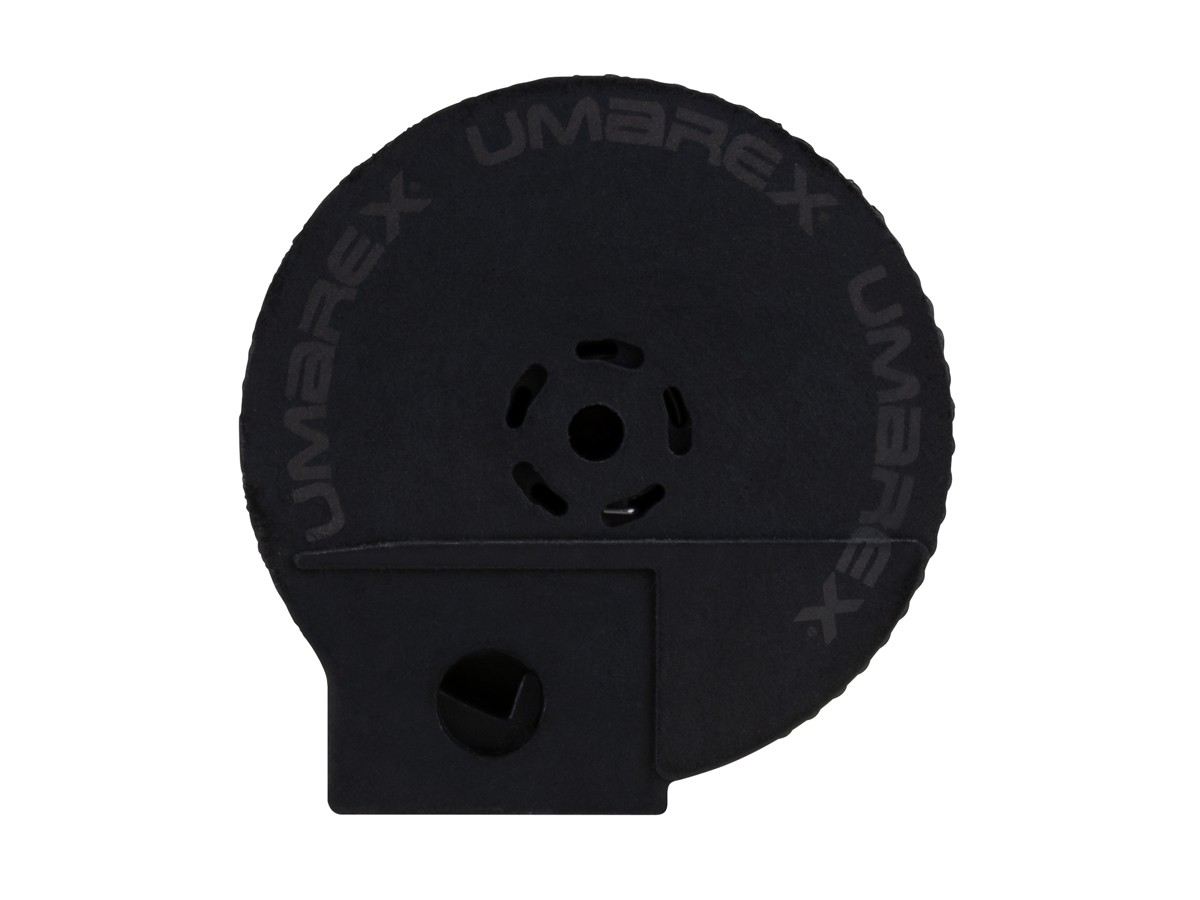
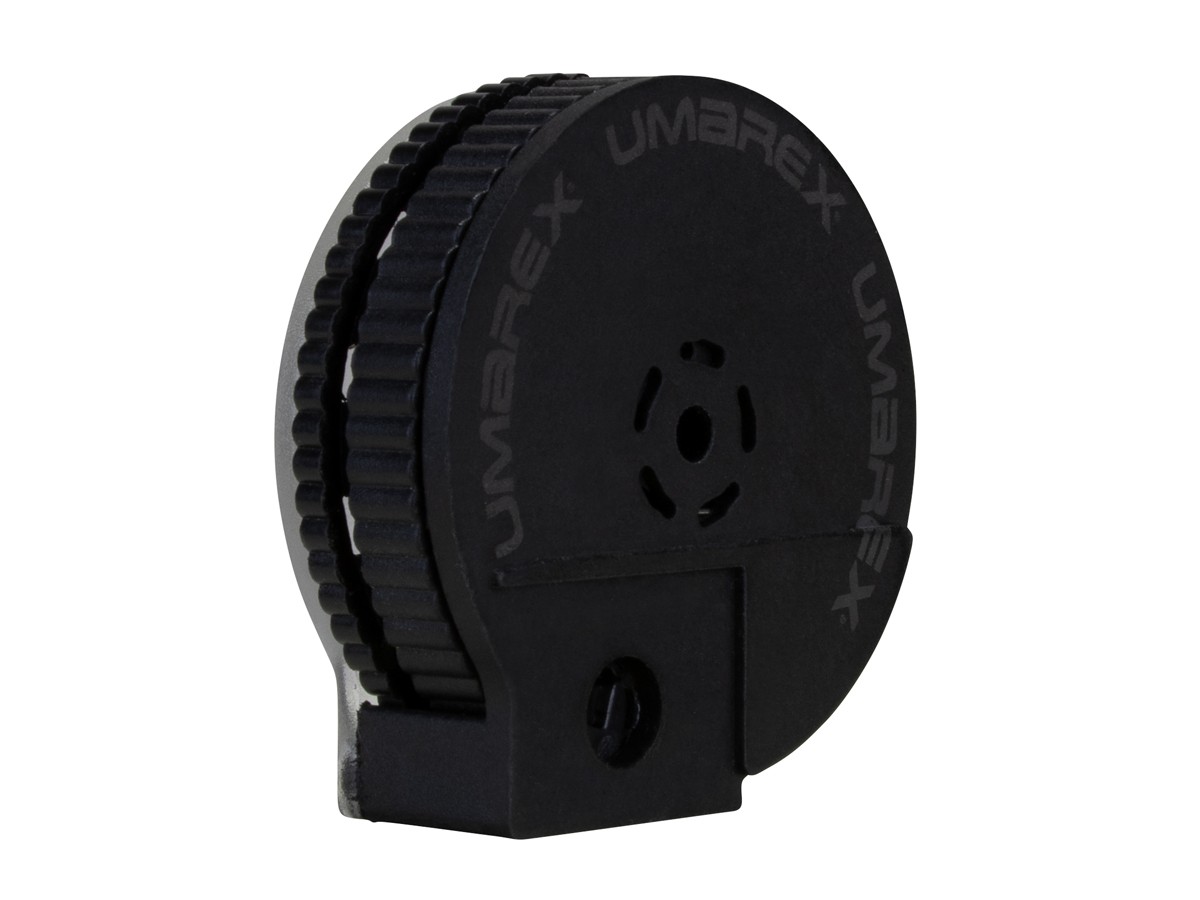
- 13-round removable rotary magazine
- 1/2×20 threaded muzzle with cap
- Internal regulator set to 1,800 psi
- Max. fill pressure: 3,625 psi (250 bar)
- Max. velocity: 830 fps (w/ 24gr pellet)
- Max. energy: 38 fpe (w/ 24gr pellet)
- Manual button safety
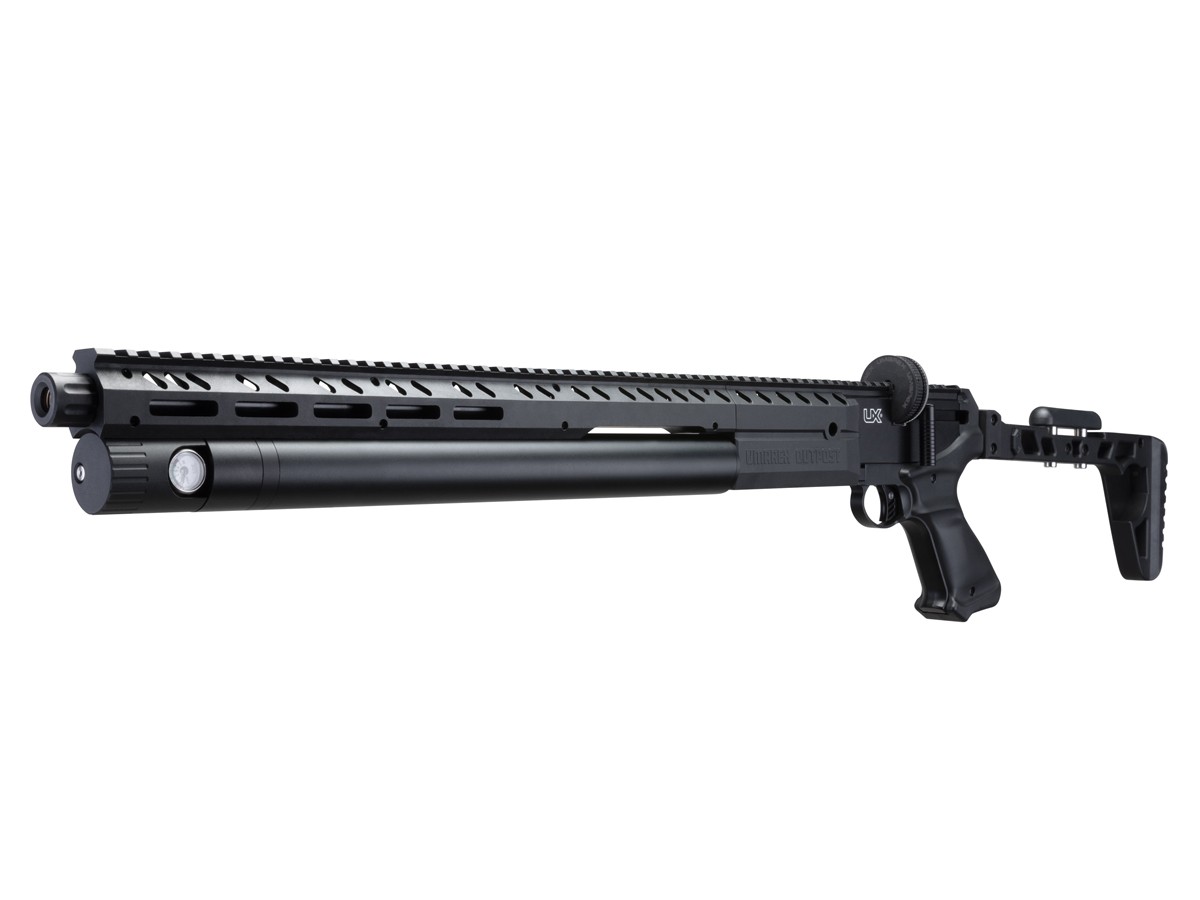
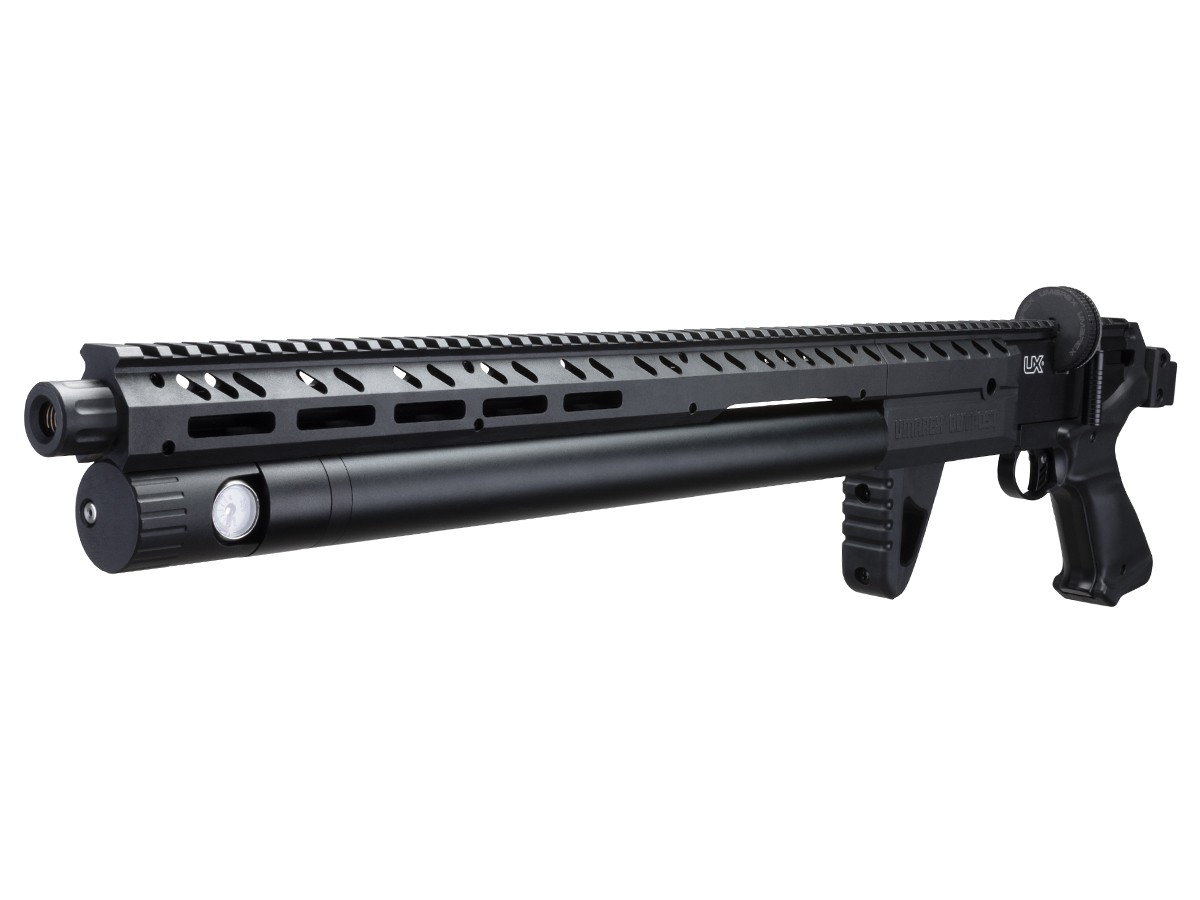
- Integrated side-facing pressure gauge on air tube
- Extended Picatinny scope rail
- M-LOK accessory slots on both sides of handguard
- Folding buttstock with ridged rubber buttpad
- Magazine storage in buttstock
- Adjustable cheek rest
- Male Foster quick-disconnect fill port
- Includes single-shot tray, two 13-round magazines, two NitroAir cartridges
- Overall length: 37.5″ (stock extended), 28.46″ (stock folded)
- ManufacturerUmarex
- Caliber .25
- Velocity 830 fps
- Condition New
- Ammo Type Pellets
- Action Sidelever
- Barrel Style Rifled
- Fire Mode Repeater
- Gun Weight 4.74
- Loudness 3-Medium
- Mechanism Pre-charged pneumatic
- Rail Weaver/Picatinny
- Safety Manual
- Front Sights none
- Rear Sights none
- Trigger Adjustability Two-stage adjustable
- Use Small game hunting/target practice
- Warranty 1-year limited warranty
Umarex Outpost .25 Caliber Dual-Fuel PCP Air Rifle
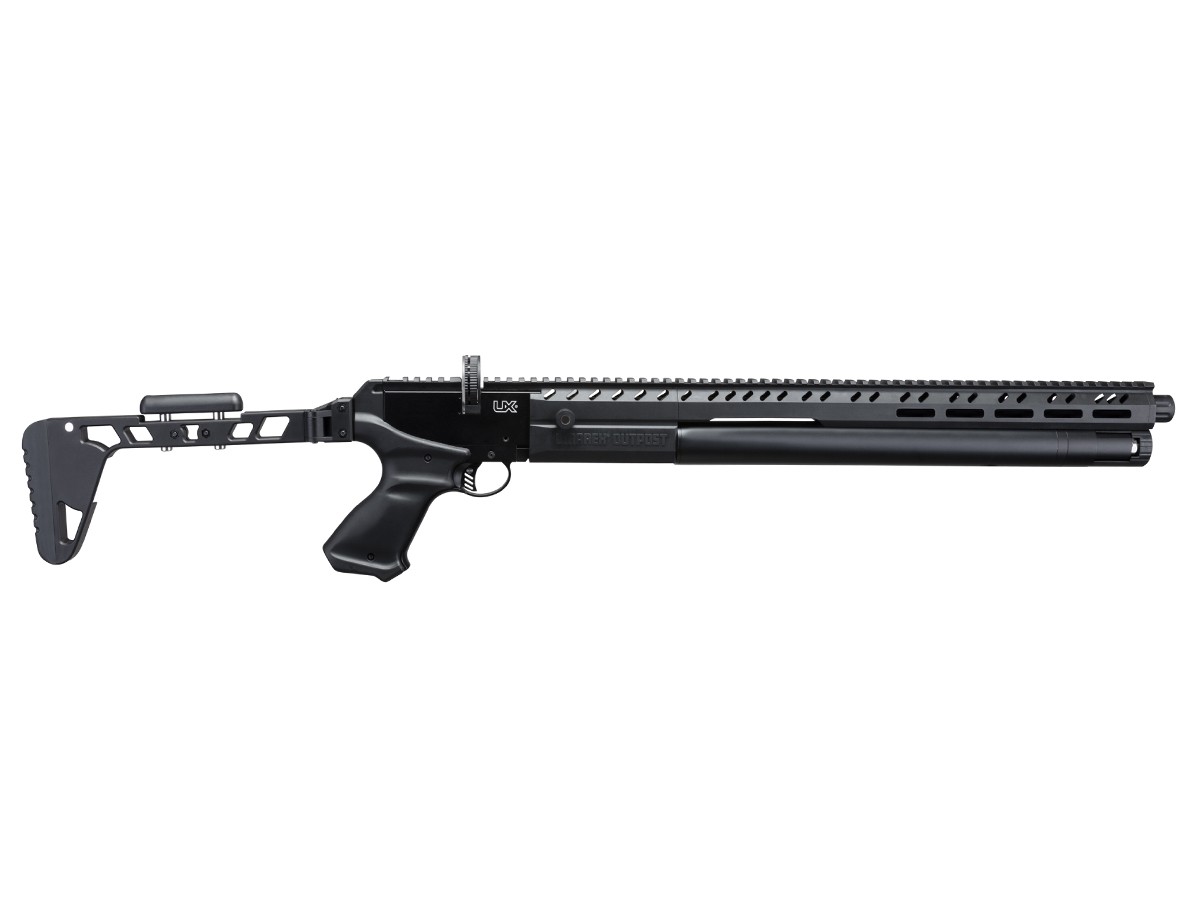
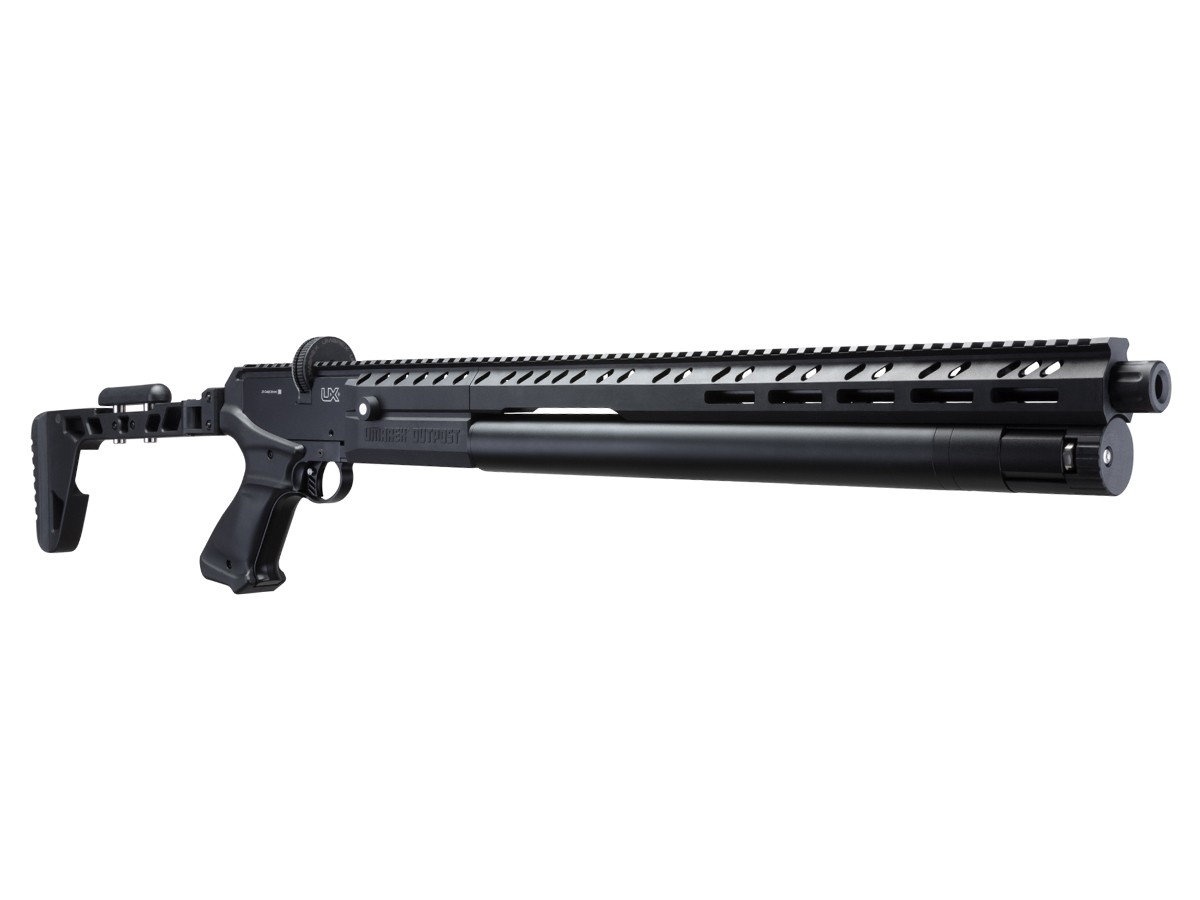
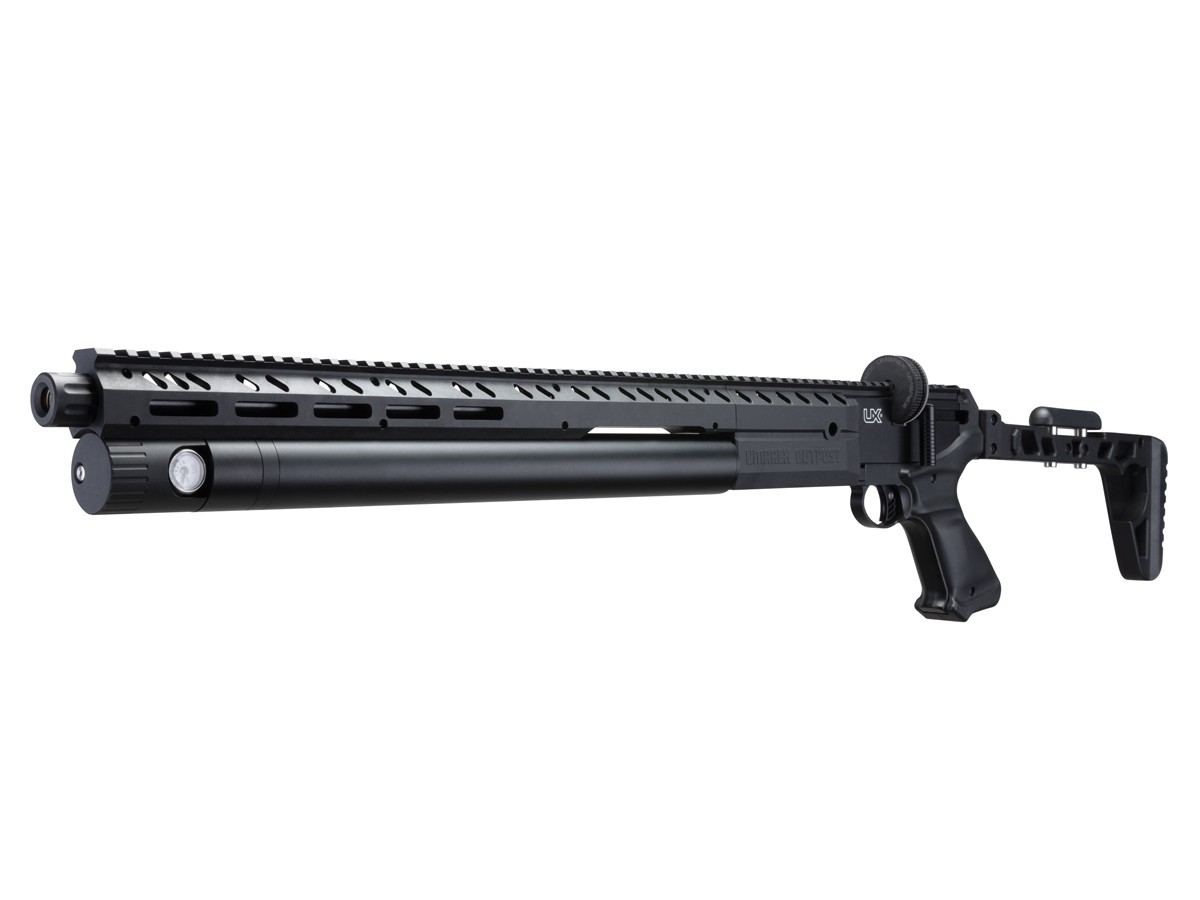
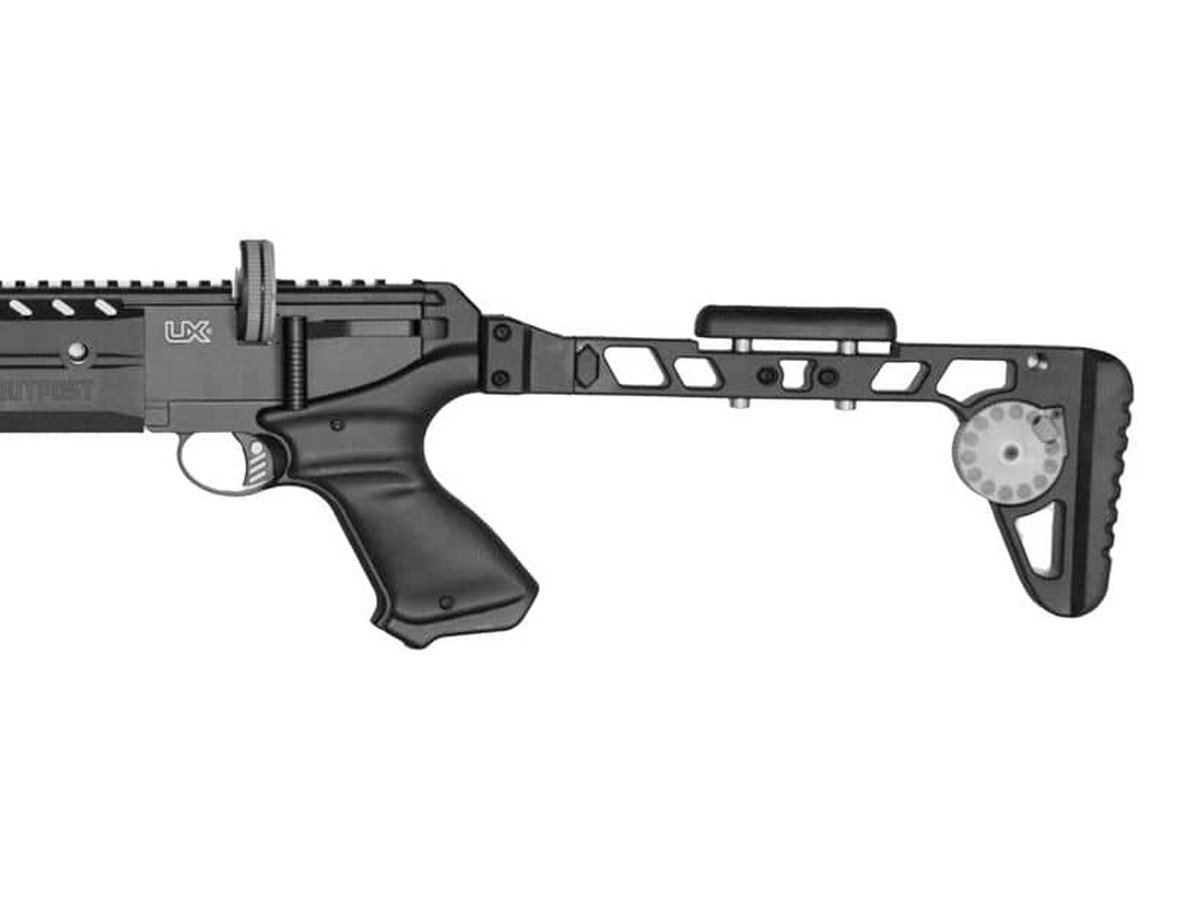
Power, portability, and dependable performance have been brought together in the Umarex Outpost. Designed for target shooting, responsible small-game hunting, and outdoor preparedness, this adaptable .25-caliber air rifle has been engineered to remain ready for a wide variety of situations. Instead of being restricted to one air source, greater flexibility has been provided through an innovative dual-fuel system.
A refillable 3,625 PSI PCP tank can be used whenever a high-pressure pump or compressor is available. Alternatively, compatible Umarex NitroAir cartridges can be installed when convenient filling equipment cannot be accessed. As a result, greater independence can be enjoyed at the range, on private land, or during extended outdoor trips.
Moreover, compact handling has been supported by a lightweight construction and folding stock. Reliable follow-up shots have also been encouraged through a smooth sidelever action and 13-round magazine. Therefore, whether recreational targets are being engaged or lawful pest-control work is being performed, practical performance can be expected from the Umarex Outpost.
Why Choose the Umarex Outpost?
Modern airgunners are often required to choose between portability, power, and filling convenience. With the Umarex Outpost, those qualities have been combined within one versatile platform. A .25-caliber rifled barrel has been included, while energy of up to approximately 38 foot-pounds and velocity of up to 830 FPS have been advertised with suitable pellets. Actual results may be affected by pellet weight, temperature, air pressure, and other shooting conditions. Umarex USA
In addition, consistent shot performance has been supported by a regulated operating system. A two-stage adjustable trigger has been fitted so that the shooting experience can be refined according to personal preference. Meanwhile, an adjustable cheek comb has been provided to help a comfortable alignment with the chosen optic be established.
Because no fixed sights have been included, a scope or compatible optic should be mounted. Fortunately, generous accessory space has been supplied through a full-length Picatinny rail. Additional equipment can also be attached through the built-in M-LOK mounting positions.
Highlighted Umarex Outpost Features
- Powerful .25-caliber pellet platform
- Dual-fuel capability for PCP air or NitroAir cartridges
- Up to 830 FPS with suitable ammunition
- Approximately 38 foot-pounds of muzzle energy
- Two included 13-round magazines
- Single-shot tray included
- Smooth sidelever cocking system
- Refillable 3,625 PSI PCP tank included
- Two NitroAir cartridges included
- Folding stock for compact storage and transport
- Adjustable cheek comb for improved optic alignment
- Integrated spare-magazine storage
- Full-length Picatinny optics rail
- M-LOK accessory mounting positions
- Two-stage adjustable trigger
- Shrouded, rifled barrel
- Threaded muzzle beneath the factory muzzle device
- Manual safety mechanism
- Lightweight construction of approximately 4.74 pounds
Flexible Dual-Fuel Performance
One of the most useful advantages of the Umarex Outpost air rifle is provided by its interchangeable air-source arrangement. For regular range sessions, the included PCP tank can be filled using suitable high-pressure air equipment. When a compressor or hand pump cannot be carried, the installed tank may also be filled through a compatible Umarex N2 fill station and NitroAir cartridges.
Alternatively, a NitroAir cartridge can be placed directly into the rifle after the PCP tank has been removed. Therefore, more than one operating option has been made available. This flexibility can be especially valuable when the rifle is being transported to remote shooting areas where conventional filling equipment may not be readily available.
NitroAir cartridges have also been designed for long-term storage without the seal-related limitations commonly associated with conventional CO2 cartridges. Consequently, the rifle can be prepared for future use more conveniently. Nevertheless, all storage, installation, and pressure-management instructions supplied by the manufacturer must always be followed.
Compact and Adaptable Field Design
Although impressive .25-caliber performance has been delivered, excessive bulk has been avoided. A folding stock has been installed so the rifle can be packed into a more manageable space. Accordingly, easier storage can be achieved inside an appropriate locked case, vehicle compartment, or equipment bag where local laws permit.
Comfort has also been considered through the adjustable cheek comb. Once an optic has been mounted, the comb can be positioned to support a more natural cheek weld. Additionally, a spare 13-round magazine can be carried within the integrated stock compartment. Consequently, essential equipment can be kept close to the rifle instead of being left loose inside a bag.
Because the rifle weighs approximately 4.74 pounds before accessories are mounted, fatigue may be reduced during longer outdoor sessions. However, the final handling balance will be influenced by the scope, mounts, moderator, sling, and other accessories that are selected.
Fast Sidelever Operation and Practical Capacity
Efficient operation has been encouraged through the side-mounted lever system. After a loaded magazine has been inserted, each pellet can be indexed as the action is cycled. Therefore, repeated manual loading between every shot can be avoided.
Two 13-round magazines are generally supplied with the standard package, although package contents should always be confirmed with the retailer before purchase. A single-shot tray is also included, allowing pellets to be loaded individually when a slower and more deliberate shooting routine is preferred. Umarex’s 2026 product announcement
Furthermore, an adjustable two-stage trigger has been incorporated. Through careful adjustment within the manufacturer’s recommended limits, a more personalized trigger feel can be established. Any trigger adjustment should, however, be performed only after the rifle has been completely unloaded and depressurized as directed in the manual.
Accessory-Ready Configuration
Personalization has been made straightforward with the Umarex Outpost PCP air rifle. A full-length Picatinny rail allows an appropriate scope, red-dot sight, or other compatible optic to be mounted. Meanwhile, M-LOK positions have been placed along the handguard for approved accessories.
A threaded muzzle has also been concealed beneath the factory muzzle device. Where moderators are legally permitted, a compatible airgun-rated unit may be installed using the provided 1/2-20 thread. Local regulations must be checked before any muzzle device is purchased or fitted.
Ideal Uses for the Umarex Outpost
Versatility has been built into every major part of this air rifle. Paper targets and suitable reactive airgun targets can be engaged at a properly prepared range. In jurisdictions where airgun hunting is permitted, the available .25-caliber energy may also be considered for lawful small-game or pest-control applications.
Nevertheless, ethical shooting distances should be established through careful practice. Appropriate pellets should be tested, and accuracy should be confirmed before any hunting activity is undertaken. Suitable eye protection, a secure backstop, and responsible muzzle control must always be used.
What Is Included?
Depending on the selected package, the following equipment may be supplied:
- One Umarex Outpost .25-caliber air rifle
- One refillable 3,625 PSI PCP tank
- Two 13-round rotary magazines
- One single-shot loading tray
- Two compatible NitroAir cartridges
- Manufacturer documentation
Retailer bundles may contain additional items such as a scope, rings, pellets, pump, or carrying case. Therefore, the exact package contents should be verified before an order is completed.
Order the Umarex Outpost Today
A practical combination of power, flexibility, and compact handling has been delivered by the Umarex Outpost. Dual-fuel operation has been provided, convenient magazine capacity has been included, and extensive accessory compatibility has been built into the platform. Above all, an adaptable .25-caliber air rifle has been created for shooters who value preparedness without sacrificing everyday usability.
Choose the Umarex Outpost today and experience a portable PCP platform that has been designed to remain capable, configurable, and ready for responsible use. Availability and specifications may vary, so current package details and local airgun regulations should be confirmed before purchase.
Umarex Outpost Caliber, FAC Power and Accessories
The Umarex Outpost has been designed as a powerful, portable, and highly adaptable air rifle. Its .25-caliber configuration, dual-source operating system, practical accessory rails, and approximately 38 foot-pounds of muzzle energy make it suitable for experienced airgun users seeking more capability than a standard low-powered rifle can provide.
Available Caliber
The Umarex Outpost is currently offered in .25 caliber, also known as 6.35 mm. A choice between .177, .22, and .25 caliber has not been provided for this model. Therefore, buyers should ensure that .25-caliber pellets are available locally before an order is completed.
Because a larger and heavier pellet is used, more energy can be retained than would usually be delivered by a lightweight .177 pellet. Greater resistance to crosswinds may also be experienced with a properly matched pellet. Consequently, the rifle can be considered for outdoor target shooting, lawful pest management, and permitted small-game hunting.
However, maximum accuracy will not be produced by every pellet. Different brands, head sizes, designs, and weights should be tested safely against a suitable backstop. Generally, domed pellets are selected for target practice and general outdoor shooting because stable flight and good energy retention can be achieved. Hunting pellets may be considered where their use is lawful and appropriate, although ethical performance should always be confirmed through accuracy testing.
The rifle’s advertised performance is based on suitable .25-caliber ammunition. Velocity and muzzle energy will be influenced by pellet weight, air pressure, environmental conditions, and the individual rifle. Therefore, published figures should be treated as maximum or reference performance rather than guaranteed results for every pellet.
FAC Classification and Legal Requirements
With approximately 38 foot-pounds of muzzle energy, the standard Umarex Outpost is positioned well above the 12-foot-pound limit that applies to an unlicensed air rifle in England and Wales. Consequently, it would normally be treated as an FAC-rated air rifle, and possession would require the appropriate Firearm Certificate.
Official UK guidance states that an air rifle capable of producing more than 12 foot-pounds may only be possessed under a Firearm Certificate issued by the relevant police force. Because the Umarex Outpost has been advertised at approximately 38 foot-pounds, it should not be ordered, possessed, or used in England or Wales without the necessary authorization. GOV.UK air-weapons guidance
Different requirements are applied in Scotland and Northern Ireland. An Air Weapon Certificate or another appropriate authorization may be required depending on the rifle, its power, and the buyer’s location. Furthermore, airgun ownership, hunting, transportation, and storage laws differ considerably between countries. Local regulations should always be confirmed with the relevant authority before purchasing.
The rifle’s power should never be altered by an unauthorized person. Any repair, adjustment, inspection, or legal power conversion should be completed only by a qualified airgun technician or appropriately licensed dealer. Secure storage must also be maintained, with the rifle kept unloaded, locked away, and inaccessible to unauthorized users.
Power and Performance
Up to 38 foot-pounds of muzzle energy can be produced by the Umarex Outpost with an appropriate pellet. A maximum velocity of approximately 830 FPS has also been advertised. This combination allows a heavier .25-caliber projectile to be propelled with considerably more energy than would be expected from a typical sub-12-foot-pound air rifle.
Consistent performance has been supported by a regulated system operating at approximately 1,800 PSI. Because regulated air is supplied to the firing mechanism, excessive velocity variation may be reduced across the rifle’s usable pressure range. Consequently, a more predictable point of impact can be maintained during a shooting session.
Power can be supplied in two ways. First, the included 3,625 PSI refillable PCP tank can be filled using compatible high-pressure equipment. Alternatively, an approved NitroAir cartridge can be installed in place of the tank. This dual-source arrangement allows the rifle to be used when a hand pump, compressor, or diving cylinder cannot conveniently be accessed.
Nevertheless, only approved filling equipment and compatible connectors should be used. The rifle’s maximum fill pressure must never be exceeded. Before filling, the tank, seals, hose, and fittings should be inspected, while the manufacturer’s instructions should be followed exactly.
Optics and Sight Accessories
Traditional open sights have not been fitted to the Umarex Outpost. Therefore, an optic will be required before accurate aiming can be achieved. A full-length Picatinny rail has been provided, allowing a compatible riflescope or red-dot sight to be mounted.
For general outdoor shooting, a variable-power airgun-rated scope may be selected. Suitable Picatinny scope rings will also be required. A compact red-dot sight may be preferred when fast target acquisition and a lightweight configuration are prioritized.
Before use, all mounts should be properly secured, eye relief should be checked, and the optic should be zeroed at a safe range. Because this is a comparatively powerful .25-caliber rifle, a secure backstop capable of containing the pellet’s energy must always be provided.
Recommended Umarex Outpost Accessories
A variety of practical accessories can be added to improve transportation, comfort, maintenance, and range use:
- Airgun-rated riflescope or red-dot sight
- Picatinny-compatible scope rings
- Quality .25-caliber pellets
- Compatible high-pressure hand pump or PCP compressor
- Approved fill hose and fittings
- Spare 13-round Umarex Outpost magazines
- Protective hard or padded rifle case
- M-LOK-compatible sling mounting point
- Comfortable rifle sling
- M-LOK bipod or Picatinny rail section
- Chronograph for responsible power monitoring
- Airgun-safe cleaning and maintenance products
- Protective eyewear
- Secure, lockable storage equipment
- Suitable pellet trap and dependable backstop
M-LOK mounting positions have been incorporated into the handguard, while a full-length Picatinny rail has been installed above the action. Consequently, a bipod, sling mount, light, or other lawful accessory can be positioned according to the owner’s requirements.
A 1/2-20 threaded muzzle has also been provided beneath the factory muzzle device. Where legally permitted, a compatible airgun moderator may be fitted. However, moderators can be regulated or certificate-controlled in certain jurisdictions. Their legal status should therefore be checked before one is purchased, possessed, or installed.
With the correct pellets, filling equipment, optic, and safety accessories, the Umarex Outpost can be configured as a capable .25-caliber platform. Its full-power FAC performance should nevertheless be treated responsibly, and all ownership, storage, transportation, and use requirements must be satisfied before the rifle is operated.
Frequently Asked Questions
What is the Umarex Outpost?
The Umarex Outpost is a modern .25-caliber pre-charged pneumatic air rifle designed around portability, flexibility, and substantial power. A refillable PCP tank and compatibility with Umarex NitroAir cartridges allow the rifle to be operated through two different air-source options. Additionally, a folding stock, sidelever action, adjustable cheek comb, full-length Picatinny rail, and M-LOK mounting positions have been incorporated into its compact platform. It is primarily intended for experienced adult airgun users participating in lawful target shooting, pest management, and permitted small-game hunting.
Which caliber is available?
The rifle is currently offered in .25 caliber, or 6.35 mm. Factory versions in .177 or .22 caliber have not been announced for this particular model. Therefore, only quality .25-caliber airgun pellets should be used. Before purchasing, buyers should confirm that appropriate ammunition is readily available in their region. Because pellet dimensions and manufacturing tolerances can vary, several reputable brands and weights may need to be tested before the most accurate option is identified.
How powerful is the rifle?
Approximately 38 foot-pounds of muzzle energy can be generated with suitable ammunition. A maximum velocity of around 830 feet per second has also been advertised. However, actual performance will be influenced by pellet weight, design, air pressure, temperature, and the condition of the rifle. For that reason, the published velocity should not be expected with every type of pellet. A chronograph can be used by a responsible owner or qualified technician when the rifle’s actual performance must be established.
Is a Firearm Certificate required in the United Kingdom?
In England and Wales, an air rifle capable of producing more than 12 foot-pounds must generally be held on a Firearm Certificate. Because this model is advertised at approximately 38 foot-pounds, it would normally be treated as an FAC-rated air rifle. The correct authorization must therefore be obtained before it is purchased or possessed.
Separate requirements apply in Scotland and Northern Ireland. Buyers should contact the relevant police firearms-licensing department or another qualified authority before ordering. Airgun laws can also change, so the rules applying to a buyer’s location should always be verified.
Is a sub-12-foot-pound version available?
The standard model has been presented as a full-power .25-caliber rifle producing approximately 38 foot-pounds. A factory-produced sub-12-foot-pound version has not been confirmed. Buyers should not assume that one is available simply because lower-powered air rifles are sold in their country.
No attempt should be made to reduce, increase, or otherwise modify the rifle’s power without qualified professional assistance. Any legally required conversion should be performed by an appropriately licensed dealer or experienced airgun technician, and written confirmation of the resulting power level should be requested.
What does dual-fuel operation mean?
Dual-fuel operation means that power can be supplied through either the included refillable PCP tank or a compatible NitroAir cartridge. The PCP tank can be charged using suitable high-pressure filling equipment. Alternatively, the tank can be removed and an approved NitroAir cartridge can be installed in its place.
This arrangement provides useful flexibility when a compressor, hand pump, or diving cylinder is not conveniently available. Nevertheless, both systems must be handled according to the manufacturer’s instructions. Only compatible cartridges, tanks, connectors, and filling equipment should be used.
What pressure can the PCP tank hold?
The included PCP tank is rated for a fill pressure of approximately 3,625 PSI. The rifle is also described as being regulated at approximately 1,800 PSI, helping air to be released more consistently during the usable portion of each fill.
The maximum pressure marked on the rifle and tank must never be exceeded. Before filling, all hoses, fittings, seals, and connectors should be checked for visible wear or damage. If any uncertainty is experienced, the rifle should be inspected by a qualified airgun technician rather than filled or discharged.
Does it include a hand pump or compressor?
A hand pump or compressor may not be included with the standard rifle package. The usual package has been described as containing the rifle, a refillable PCP tank, two magazines, a single-shot tray, and two NitroAir cartridges. However, package contents can vary between retailers and promotional bundles.
Some kits may include an optic, scope mounts, pellets, a pump, additional cartridges, or a carrying case. Consequently, the retailer’s exact product listing should be reviewed before an order is placed. Optional equipment should never be assumed to be included.
How many pellets does the magazine hold?
Each rotary magazine holds 13 .25-caliber pellets. Two magazines are generally supplied, providing a combined loaded capacity of 26 pellets when both have been prepared correctly. A storage position for a spare magazine has also been incorporated into the stock.
Although the magazine provides convenient follow-up shots, the rifle remains manually operated. The sidelever must be cycled for each shot. The magazine should be loaded only with undamaged pellets of the correct caliber, and it should never be forced into the action.
Is a single-shot tray included?
Yes. A single-shot tray is usually included with the standard package. It allows one pellet to be loaded at a time instead of being fed from the rotary magazine. This option can be useful during deliberate target shooting, pellet testing, or chronograph work.
Some shooters may also prefer a single-shot tray when evaluating different pellet weights and designs. Slower loading can encourage a more controlled shooting routine, although it does not automatically make the rifle more accurate. Accuracy will still depend on the pellet, optic, shooting technique, environmental conditions, and mechanical condition of the rifle.
What type of action is used?
A manually operated sidelever action is used. After a pellet has been fired, the lever must be cycled to prepare the next shot and index the magazine. Smooth operation can help quicker follow-up shots to be taken while preserving the control associated with a manually operated air rifle.
The lever should be moved firmly but never forced. If unusual resistance is felt, operation should be stopped and the rifle should be checked. Attempting to cycle the mechanism after a pellet has been incorrectly loaded could cause a jam or damage.
Does it have open sights?
No traditional front or rear sights are fitted. An appropriate optic must therefore be installed on the top Picatinny rail. Depending on the intended use, a variable-power riflescope or compatible red-dot sight may be selected.
Correctly sized Picatinny mounts will also be required. Once the optic has been fitted, eye relief, alignment, and fastener security should be checked. The rifle must then be zeroed safely against a backstop capable of stopping powerful .25-caliber pellets.
What accessories can be attached?
A full-length Picatinny rail and M-LOK mounting positions have been provided. Therefore, compatible optics, scope mounts, bipods, sling attachments, and other lawful airgun accessories can be installed. Additional Picatinny sections may also be attached to the M-LOK positions when required.
Every accessory should be selected carefully because unnecessary equipment can increase weight and alter the rifle’s balance. Only secure, correctly sized mounting hardware should be used. Accessories must not obstruct the action, trigger, safety mechanism, pressure gauge, or folding stock.
Can a moderator be fitted?
A 1/2-20 threaded muzzle is provided beneath the factory muzzle device. Where legally permitted, a compatible airgun-rated moderator may be installed. The thread size, caliber clearance, alignment, and pressure suitability should all be confirmed before use.
Moderators are restricted or certificate-controlled in some jurisdictions, including certain circumstances involving FAC-rated air rifles. Accordingly, local laws and certificate conditions should be verified before one is purchased or fitted. An unsuitable or misaligned device must never be installed.
Is the trigger adjustable?
A two-stage adjustable trigger is fitted. This allows the trigger’s operation to be refined within the limits established by the manufacturer. A well-adjusted trigger may support a more predictable release and a comfortable shooting experience.
However, adjustments should be made only while the rifle is unloaded, pointed in a safe direction, and handled according to the manual. An excessively light or incorrectly adjusted trigger could create an unsafe condition. If the adjustment process is not fully understood, the work should be completed by a qualified technician.
What is the purpose of the folding stock?
The folding stock allows the rifle’s overall storage length to be reduced, making it easier to place inside a suitable locked case or transport bag. This feature can be useful when space is limited or when equipment must be carried to an approved range or authorized shooting location.
The stock should be fully extended and securely locked before firing unless the manufacturer specifically permits another configuration. Local laws should also be checked because overall-length restrictions or transportation requirements may apply to full-power air rifles.
How much does the rifle weigh?
The rifle has been listed at approximately 4.74 pounds before a scope and additional accessories are installed. Its relatively light construction supports portability and can reduce fatigue during longer outdoor sessions.
Nevertheless, the final weight will depend on the selected optic, mounts, bipod, sling, muzzle device, and air source. A large scope may shift the balance upward, while equipment fitted toward the front of the handguard may make the rifle feel muzzle-heavy. Accessories should therefore be chosen according to genuine need.
Is it suitable for target shooting?
Yes. It can be used for lawful recreational target shooting at a properly equipped range or on authorized private property. Its regulated power system, rifled barrel, adjustable trigger, and optic rail support accurate shooting when suitable pellets and good technique are used.
Because considerable energy is produced, ordinary lightweight pellet traps may not be adequate. A strong backstop rated for the rifle’s power and caliber must be provided. Eye protection should be worn, and all range commands and local safety rules should be followed.
Can it be used for hunting?
Where local law permits, the rifle’s .25-caliber power may make it suitable for certain small-game and pest-control applications. However, legal permission, landowner authorization, appropriate quarry selection, and humane shot placement are essential.
Before any live quarry is considered, dependable accuracy should be demonstrated from realistic field positions and at the intended distance. Pellet performance should also be assessed carefully. The rifle’s advertised power does not replace sound judgment, training, or an understanding of local hunting regulations.
Which pellets should be used?
Only high-quality .25-caliber airgun pellets should be used. Domed pellets are often selected for general outdoor target shooting because efficient flight and energy retention can be achieved. Other designs may perform differently depending on the rifle and intended purpose.
Several pellet weights and reputable brands should be tested to determine which option groups most consistently. Damaged, deformed, dirty, or incorrectly sized pellets should be discarded. Firearm ammunition, steel BBs, darts, bolts, and unauthorized projectiles must never be loaded.
How should it be stored?
The rifle should be unloaded, depressurized when recommended by the manufacturer, and secured inside a locked cabinet or other legally compliant storage system. Pellets and removable magazines should be stored separately where required. Access must be prevented for children, prohibited persons, and all unauthorized users.
High-pressure components should be protected from excessive heat, moisture, impacts, and corrosion. Before long-term storage, the manufacturer’s instructions regarding the PCP tank or NitroAir cartridge should be followed. Applicable certificate and police-security conditions must also be satisfied.
Is the Umarex Outpost suitable for beginners?
Its controls may be straightforward, but its approximately 38-foot-pound output makes it considerably more powerful than a typical beginner air rifle. It is therefore better suited to responsible adults who understand PCP filling procedures, safe handling, secure storage, and the legal obligations associated with full-power airguns.
A new shooter should receive instruction from a qualified person or recognized shooting club before using it. Supervised practice should be completed in a controlled environment, and familiarity should be developed gradually. Regardless of experience, the muzzle must always be kept in a safe direction, and the rifle must be treated as loaded until personally confirmed otherwise.
Practical Use Scenarios
The Umarex Outpost has been developed for situations in which portability, dependable power, flexible air supply, and straightforward handling are valued. Rather than being limited to one specialized purpose, the rifle can be configured for controlled target practice, organized range sessions, authorized land management, remote property maintenance, and extended outdoor trips.
Its .25-caliber platform, regulated power system, folding stock, 13-round magazine, single-shot tray, and multiple accessory rails allow different setups to be created. Nevertheless, every activity must be conducted by a legally authorized adult in a safe environment. Local laws, certificate conditions, landowner permission, secure transportation rules, and suitable backstop requirements must always be followed.
A Controlled Day at the Shooting Range
A typical range session can begin with the rifle being transported unloaded inside a secure, padded case. The magazines can be carried separately, while pellets, eye protection, filling equipment, and basic maintenance items can be organized inside an appropriate range bag. If a Firearm Certificate or another authorization is required, the necessary documentation should also be carried.
After arrival, the rifle should be removed from its case only at the designated firing point and in accordance with the range officer’s instructions. The barrel should be kept pointed safely downrange, while the magazine well, loading area, and safety mechanism should be checked before preparation begins.
Before firing, the available pressure should be confirmed. If the refillable tank requires charging, approved high-pressure equipment should be connected according to the manufacturer’s instructions. The tank’s maximum rated pressure must never be exceeded. Once the required pressure has been reached, the system should be allowed to stabilize before the filling connection is safely released.
A newly installed scope should first be checked at a short distance. The single-shot tray can be used during this stage because one pellet can be loaded deliberately for each adjustment. After the initial point of impact has been confirmed, small corrections can be made to the scope. The target can then be moved to the intended zeroing distance.
Several five-shot groups may be fired with different pellet varieties. Group size, point of impact, and overall consistency can be recorded. Although one pellet may deliver the highest velocity, another may produce tighter groups. Therefore, accuracy should be prioritized instead of velocity alone.
Once a suitable pellet has been identified, the rotary magazine can be used. Smooth cycling should be practiced without rushing. This range scenario allows familiarity with the sidelever, manual safety, trigger stages, magazine indexing, and pressure behavior to be developed under controlled conditions.
Recreational Target Shooting on Authorized Private Land
Where local laws permit, recreational target shooting may be conducted on private property with the owner’s permission. However, a large and carefully planned safety area is required because a powerful .25-caliber pellet can travel far beyond the target if it is not contained.
Before shooting begins, the firing direction should be examined thoroughly. Roads, public footpaths, buildings, livestock areas, neighbouring property, hard surfaces, and locations that may be entered unexpectedly must be identified. A substantial backstop capable of stopping the pellet should be placed directly behind the target. Lightweight materials, fences, vegetation, and open ground should never be treated as dependable backstops.
For an informal accuracy session, paper targets can be mounted at measured distances. The adjustable cheek comb may then be positioned to support comfortable alignment with the optic. A front rest or compatible bipod can also be fitted where permitted, although the rifle should remain stable without being clamped in a way that changes its natural point of impact.
Different shooting positions can be explored after a reliable zero has been established. Bench-rested practice may first be completed, followed by kneeling, sitting, or supported standing exercises. Each position can reveal changes in stability and point of impact. Consequently, the shooter can learn how the rifle behaves outside an ideal bench setup.
The session should be stopped immediately if any person or animal enters the shooting area. Once practice has been completed, the rifle should be unloaded and checked before leaving the firing point. Targets, pellet containers, and other materials should be collected so the land is left clean and safe.
Pellet Testing and Accuracy Evaluation
Another practical scenario involves testing several .25-caliber pellets to establish which one performs most consistently. Because every barrel can show a preference for a particular pellet design or weight, valuable information can be collected through a structured comparison.
Testing should be completed on a calm day or at an indoor range whenever possible. The same target distance, aiming point, shooting rest, and scope setting should be maintained throughout the session. Each pellet type can be identified clearly so the results are not confused.
The single-shot tray is particularly useful during this process. One pellet can be inspected and loaded at a time, reducing the possibility that two varieties will be mixed inside a magazine. Groups should be fired at a measured pace, allowing concentration and consistent technique to be maintained.
Velocity may also be measured with a suitable chronograph positioned and operated according to its manufacturer’s instructions. However, muzzle energy should not be estimated from velocity alone. The pellet’s verified weight must also be included in the calculation. Where legal power limits apply, formal testing should be handled by a competent professional.
After several groups have been completed, the results can be compared. The smallest group is important, but repeatability should also be considered. A pellet that produces one excellent group and several poor groups may be less useful than one that delivers consistently good results.
Organized Club Practice and Skills Development
A recognized airgun club provides one of the most suitable environments for developing safe handling and marksmanship skills. Experienced range officers can explain local rules, safe loading procedures, approved target arrangements, and the correct response to a malfunction.
At a club, the rifle’s adjustable features can be evaluated more effectively. The cheek comb can be refined, the scope position can be checked, and the trigger can be assessed without unsafe modification. Advice may also be received regarding pellet selection and filling equipment.
Structured practice can begin with slow, deliberate shooting from a supported position. Rather than being focused only on tight groups, attention can be given to breathing, trigger control, sight alignment, and follow-through. As consistency improves, timed magazine exercises or different supported positions may be introduced under supervision.
For a new owner, this scenario is particularly valuable because poor habits can be identified early. The substantial output of the rifle should be respected, and proper instruction can help its capabilities be managed responsibly.
Authorized Pest Management Around Rural Property
On farms, orchards, or other rural properties, lawful pest management may sometimes be required to protect stored feed, crops, structures, or livestock areas. Before the rifle is considered, the target species must be identified correctly, and the legal status of that species must be confirmed.
Permission from the landowner should be secured, while any licensing or certificate conditions must be satisfied. The area should then be surveyed during daylight. Safe firing directions, reliable backstops, buildings, machinery, livestock, roads, and neighbouring land must be mapped mentally or recorded.
Because farm buildings may contain concrete, metal, stone, or other hard surfaces, the risk of deflection must be treated seriously. A shot should never be taken when a safe outcome cannot be guaranteed. Animals should not be targeted near machinery, storage tanks, rooftops, roads, or occupied structures.
Before any field use, accuracy should be verified from the position and distance likely to be encountered. If a supported standing position will be used, practice should be completed from that position rather than only from a bench. The chosen pellet must group reliably inside an appropriately small area at the intended range.
The rifle’s magazine can provide convenient follow-up capability, but speed should never replace judgment. Only a clear, lawful, humane shot should be considered. If the angle, distance, wind, backstop, or target identity is uncertain, the shot must not be taken.
After the activity, the rifle should be unloaded before buildings or vehicles are entered. Any legal reporting or land-management records should then be completed.
Small-Game Hunting Where Legally Permitted
In jurisdictions where small-game hunting with an air rifle is lawful, the available .25-caliber energy may be suitable for approved species. However, power alone does not guarantee humane performance. Pellet accuracy, shot placement, realistic distance, and the shooter’s ability remain essential.
Preparation should begin at the range. Targets representing the required precision should be engaged from field positions and at multiple distances. The shooter should establish a personal maximum distance based on repeatable accuracy rather than the rifle’s theoretical range.
Environmental conditions must also be considered. Wind can move a pellet away from the intended point of impact, while rain, low light, vegetation, or an unstable shooting position can reduce confidence. Accordingly, shots should be declined whenever conditions are unsuitable.
A sling may help the rifle to be carried safely, while a compact optic can limit unnecessary weight. The folding stock may make transportation more convenient, but it should be securely locked into its shooting position before use. The manual safety should remain engaged until a lawful shot has been identified and the shooter is prepared to fire.
Only approved quarry should be considered, and all seasonal rules, bag limits, property boundaries, and hunting permissions must be respected. If a humane result cannot be confidently achieved, no shot should be attempted.
Remote Outdoor and Preparedness Use
The dual-source design can become particularly useful during an extended stay at a remote cabin, rural worksite, or authorized outdoor location. Ordinarily, a PCP rifle depends on access to a hand pump, compressor, or charged cylinder. Here, more than one air-supply option can be carried.
For routine practice, the refillable tank may be used. Compatible cartridges can then be retained as a secondary source where lawful and appropriate. This arrangement reduces reliance on one filling method, although it does not remove the need for careful pressure management and safe storage.
Before travelling, all equipment should be inspected. Tank condition, pressure, seals, magazines, pellets, scope mounts, and the folding-stock mechanism should be checked. A compact maintenance kit, protective eye equipment, secure case, and verified backstop materials should also be included.
Extreme temperatures and direct sunlight should be avoided when pressurized components are transported or stored. The rifle must never be left unsecured inside a tent, cabin, or vehicle. Unauthorized access must be prevented at all times.
Compact Transportation Between Approved Locations
The folding stock allows the rifle to occupy less space inside an appropriately sized case. This can be helpful when travelling between home, a licensed range, an airgun club, or authorized private land.
Nevertheless, the folding design should not be treated as permission for casual or concealed carrying. The rifle should be unloaded, secured, covered, and transported only for a legitimate purpose. Magazines should be removed, and pellets should be stored as required by local law.
Upon arrival, the rifle should remain inside its case until the approved shooting area has been reached. Before departure, the chamber, magazine well, and case should be checked carefully. These procedures reduce uncertainty and support responsible transportation.
Routine Inspection After Use
Every practical use scenario should end with a basic inspection. After the rifle has been confirmed unloaded, exterior surfaces can be wiped with a clean, dry cloth. Moisture, dust, and debris should be removed, while harsh household products should be avoided.
The magazines can be inspected for damaged pellets or contamination. Scope mounts, rail accessories, the folding-stock joint, and filling connections should also be checked. Only manufacturer-approved lubricants should be applied, and excessive oil must not be introduced into the high-pressure system.
Finally, the rifle should be placed in secure, legally compliant storage. By combining careful preparation, controlled shooting, responsible maintenance, and strict legal compliance, dependable performance can be obtained across a wide range of legitimate applications.
Why Choose the Umarex Outpost?
Choosing an air rifle should involve more than looking at its maximum velocity or visual appearance. Power consistency, filling convenience, handling, accuracy potential, accessory compatibility, and long-term practicality should all be evaluated. The Umarex Outpost stands out because these qualities have been brought together within one lightweight and adaptable platform.
Although no single rifle can be considered perfect for every shooter, this model offers several meaningful advantages for experienced adults who want a powerful .25-caliber platform for lawful target shooting, authorized pest management, and permitted small-game hunting.
Flexible Dual-Source Operation
One of the strongest reasons for choosing this rifle is its dual-source power system. Most pre-charged pneumatic rifles can be operated only after their fixed or removable air cylinders have been filled with a hand pump, compressor, or diving cylinder. If filling equipment becomes unavailable, the rifle cannot be used once its remaining air has been depleted.
That limitation has been reduced through compatibility with both a refillable PCP tank and approved NitroAir cartridges. During normal range sessions, the included 3,625 PSI tank can be filled using suitable high-pressure equipment. When conventional filling equipment cannot conveniently be accessed, a compatible cartridge can be installed in place of the tank.
Consequently, greater flexibility can be enjoyed during extended trips, remote property visits, or outdoor activities. This does not make the rifle independent of consumable supplies, but it provides an alternative that is not available with many conventional PCP air rifles.
Substantial .25-Caliber Performance
Another important advantage is delivered through its .25-caliber configuration. Approximately 38 foot-pounds of muzzle energy and velocity of up to 830 FPS have been advertised with suitable pellets. Actual results will depend on pellet weight, temperature, air pressure, and the condition of the rifle.
Because heavier .25-caliber pellets can be used, more energy can generally be delivered than would be expected from a low-powered .177 or .22 rifle. Wind resistance and retained energy may also be improved when an accurate, well-matched pellet is selected.
This level of performance makes the rifle more suitable for experienced users who require greater capability than a standard recreational airgun can provide. However, its power must be treated responsibly. In England and Wales, for example, an air rifle producing more than 12 foot-pounds would normally require the appropriate Firearm Certificate.
Regulated and Predictable Power Delivery
High power is useful only when it can be delivered consistently. For this reason, the regulated operating system represents another valuable feature. The rifle has been described as being regulated at approximately 1,800 PSI, helping a controlled amount of air to be released for each shot.
Through regulation, major velocity variation may be reduced across the rifle’s usable pressure range. A more stable point of impact can therefore be supported, especially when consistent pellets and sound shooting techniques are used.
An unregulated PCP rifle may produce different velocities as its tank pressure changes. Although many unregulated rifles can still perform well, more attention may be required to identify their most consistent pressure range. With a regulated platform, the usable shooting cycle can be made more predictable and convenient.
Practical 13-Round Magazine System
Two 13-round magazines are generally included, allowing multiple pellets to be loaded before a shooting session begins. The magazine is automatically indexed when the sidelever is cycled, although the rifle remains manually operated and must be prepared for every shot.
Compared with a single-shot-only design, less time is spent loading individual pellets. This can be useful during organized target practice or authorized field applications where a responsible follow-up shot may be required.
A dedicated storage position for the spare magazine has also been incorporated into the stock. As a result, the second magazine can be kept close to the rifle instead of being carried loose in a pocket or bag. This small design feature adds practical value and reduces the likelihood that an essential accessory will be misplaced.
Single-Shot Control When Required
Although magazine-fed operation is convenient, a single-shot tray is also supplied. This provides a useful alternative when pellet testing, chronograph work, or slow precision shooting is being performed.
Each pellet can be examined before it is loaded, while different pellet varieties can be tested without being mixed inside a magazine. A deliberate loading routine may also encourage better concentration during accuracy testing.
Therefore, a choice between faster magazine operation and careful single-shot loading is provided. That flexibility makes the rifle suitable for several different shooting routines rather than forcing every user to adopt one method.
Lightweight and Compact Construction
The rifle weighs approximately 4.74 pounds before an optic and other accessories are installed. Consequently, it is considerably easier to carry than many larger full-power PCP rifles.
Its folding stock allows the overall storage length to be reduced for placement inside a suitable locked case. This feature can be beneficial when equipment space is limited or when the rifle must be transported between approved shooting locations.
However, a folding stock should never be interpreted as permission for concealed or casual carrying. All transportation laws and certificate conditions must still be followed. The rifle should remain unloaded and secured until an authorized shooting area has been reached.
Comfortable and Adjustable Shooting Position
Proper optic alignment can be difficult when a rifle’s stock does not match the shooter’s body shape or scope height. To address this issue, an adjustable cheek comb has been incorporated into the folding stock.
Once a scope or red-dot sight has been mounted, the comb can be raised or lowered to support a comfortable cheek position. A more consistent relationship between the eye and optic can then be established. Through improved alignment, unnecessary head movement may be reduced and repeatable shooting technique may be encouraged.
A two-stage adjustable trigger has also been fitted. Within the limits established by the manufacturer, the trigger can be refined to suit the user’s preference. Any adjustment must be performed while the rifle is unloaded and handled safely. If the procedure is not fully understood, professional assistance should be requested.
Excellent Accessory Compatibility
Another reason to choose this platform is the amount of mounting space provided. A full-length Picatinny rail allows a compatible scope or red-dot sight to be installed. Because no conventional front or rear sights are included, an optic will be required.
M-LOK positions have also been placed along the handguard. A sling attachment, bipod, rail section, or another lawful accessory can therefore be fitted without extensive modification.
Furthermore, a 1/2-20 threaded muzzle has been concealed beneath the factory muzzle device. Where legally permitted, an aligned, airgun-rated moderator may be installed. Local laws and certificate conditions should be checked beforehand because moderators can be regulated in some locations.
Better Prepared for Different Situations
The rifle’s strongest quality is not created by one specification. Instead, its value is produced by the way its features work together. Power is delivered through a regulated .25-caliber system. Practical follow-up capability is supplied by the 13-round magazine. Deliberate accuracy testing is supported by the single-shot tray, while transportation is made easier through the folding stock and lightweight construction.
Meanwhile, dual-source operation offers more flexibility than a PCP rifle dependent on only one filling arrangement. Generous accessory rails also allow the configuration to be adapted without requiring permanent alterations.
For shooters who only want inexpensive garden target practice, a lower-powered and simpler air rifle may be more appropriate. Likewise, specialist competition shooters may prefer a heavier platform designed exclusively for bench or field-target disciplines. However, experienced users who prioritize portability, considerable power, filling flexibility, and accessory compatibility may find this model especially appealing.
A Strong Long-Term Choice
A worthwhile air rifle should remain useful after the excitement of the initial purchase has passed. Here, different activities can be supported without requiring an entirely new platform. A compact optic and sling can be chosen for carrying, while a magnified scope and bipod can be installed for controlled target practice.
Ultimately, the rifle should be chosen because its capabilities match the intended application—not simply because it produces an impressive velocity figure. When the required legal authorization, safe facilities, dependable backstop, suitable pellets, and correct filling equipment are available, it offers a convincing balance of performance and practicality.
For a responsible adult seeking a portable yet powerful .25-caliber rifle, the combination of dual-source operation, regulated output, generous magazine capacity, adjustable ergonomics, and extensive accessory support makes the Umarex Outpost a highly competitive and versatile option.
Air Gun Buying Guide: PCP, CO2, Spring and Big-Bore Airguns
Choosing the right air gun becomes easier when its power source, caliber, intended use, and legal classification are understood. Whether a compact pistol, traditional spring rifle, modern PCP platform, or collectible replica is being considered, every model should be matched to a responsible and lawful purpose. Although some buyers want an only air gun collection, others need just gun accessories, optics, maintenance products, and secure storage equipment.
If you have wondered what is an airgun, it is a projectile-launching platform powered by compressed air or gas rather than burning firearm propellant. Therefore, the simplest air guns meaning relates to the use of stored pneumatic energy. An air powered gun may be driven by a spring piston, gas ram, CO2 cartridge, pneumatic pump, or high-pressure PCP reservoir. Meanwhile, pcp rifle meaning refers to a pre-charged pneumatic rifle filled from an external high-pressure source.
Understanding the Main Types of Air Guns
Several types of air guns are available, and each system offers different advantages. Common types of air rifles include spring-piston, gas-ram, CO2, multi-pump pneumatic, and PCP designs. Consequently, the best type of air gun will be determined by the preferred shooting activity, budget, power requirement, and access to filling equipment.
When someone asks what is a break barrel pellet gun, a spring-powered rifle with a hinged barrel is usually being described. The barrel is lowered to cock the powerplant before a pellet is loaded directly into the breech. Models such as the Crosman Shockwave .22, classic Winchester Model 55, and rifles fitted with a replacement BSA Meteor stock may be explored by shooters who appreciate straightforward operation.
By comparison, PCP platforms such as the FX Impact M3, FX DRS, RM8, Crosman 2250, Niksan Ozark TW, and models from Air Arms can provide low recoil and consistent performance. Searches for FX Airguns Sverige, FX Leopard .22 PCP specs, cheapest PCP airgun, and even the misspelled terms rexymaxx or airgu may also be used while different manufacturers are researched.
Popular Airgun Categories
- Spring and gas-ram rifles for independent operation
- PCP rifles for regulated power and shooting consistency
- CO2 pellet rifles for convenient recreational shooting
- CO2 pistol replica models for collecting and target practice
- Metal pellet gun platforms for approved pellet ammunition
- Big-bore pneumatic rifles for specialized, lawful applications
- Vintage and replica models for enthusiasts and collectors
- Airgun accessories for optics, storage, filling, and maintenance
Pellets, BBs and Compatible Ammunition
Ammunition must always be matched to the manufacturer’s instructions. A rifled pillet gun will normally be designed for lead or lead-free diabolo pellets rather than steel BBs. Conversely, BB-compatible models may fire metal bb pellets, a 4.5 mm BB, or another approved round projectile. Informal phrases such as metal pellet, bb metal bullet, and darts for bb gun are frequently searched, but they should not be treated as interchangeable ammunition descriptions.
A dart pellet gun or airgun designed for reusable darts should be loaded only with approved projectiles. Darts must never be placed into an ordinary pellet rifle unless compatibility has been expressly confirmed. Similarly, a clean, correctly labeled pellet tin should be used so calibers and pellet types are not accidentally mixed.
Among the many types of pellet guns, caliber, magazine design, rifling, and powerplant must be checked carefully. Products such as the Umarex RP5 CO2 pellet gun, SA 10 pistol, Walther CP88 Competition, Smith and Wesson CO2 pistol, and Umarex – Legends replicas may use different magazines, cartridges, and ammunition. Therefore, the manual should always be consulted before loading.
Air Pistols, Revolvers and Replicas
When asking what is air pistol, buyers are generally referring to a handheld air-powered platform intended for controlled target practice, training, or collecting. CO2-powered replicas are popular because familiar styling and convenient operation can be provided without a firearm cartridge being used.
Classic choices may include a Webley revolver, Webley MKVI, other Webley guns, and a revolver air gun pellet CO2 model. The alternative phrase air gun pellet CO2 revolver may be encountered when the same product category is searched online. Additionally, collectors may compare replica air pistols with Ekol blank guns, although blank-firing products fall into a different category and may be governed by separate laws.
Before any pistol is purchased, local regulations should be reviewed. Searches such as gun UK do not provide enough legal context because power limits, age restrictions, transportation rules, and licensing obligations can vary considerably.
Optics, Energy and Accuracy Equipment
A properly selected optic can make target shooting with air rifles more comfortable and repeatable. For instance, a mil dot scope contains reference points that can assist with aiming compensation at different distances. The shorter search term mil dot is often used when compatible scopes and reticles are being compared.
An FPE calculator or Pyramyd AIR calculator can be used to estimate muzzle energy when pellet weight and verified velocity are known. However, calculated output should not replace professional testing where a legal power threshold applies. Likewise, unrelated comparisons such as .45 ACP muzzle energy joules should not be used to judge an airgun because firearm cartridges and pneumatic platforms operate very differently.
A sniper set may be used informally to describe a rifle bundle supplied with a scope, mounts, bipod, or case. Nevertheless, “precision shooting package” is usually a clearer retail description. For transportation and protection, an aluminium rifle case can be selected, provided that its dimensions, locking system, and local storage requirements are suitable.
Slingshots, Catapults and Airguns
A wrist rocket is a wrist-braced slingshot rather than an airgun. If buyers ask for another name for slingshot, the word “catapult” may be used in some regions. Likewise, synonym for slingshot searches may produce terms such as hand catapult or wrist-braced launcher.
The question what’s the difference between a slingshot and a catapult often depends on regional language. In North America, “slingshot” generally describes a handheld elastic launcher, while “catapult” may describe a larger mechanical device. In Britain and some other regions, however, “catapult” can describe the handheld item.
A catapult vs slingshot comparison should include band type, frame design, intended ammunition, and local restrictions. Anyone asking are slingsgots illegsl should consult the current laws applying to their country, state, or municipality rather than relying on a general product page. A Mossy Oak bow is also a different sporting product and should not be categorized as either a slingshot or an airgun.
Pest Management and Responsible Use
Questions such as can air rifles kill, will a BB gun kill a rat, and will a pellet gun kill a rat are frequently entered by property owners. However, humane pest management cannot be based only on whether a projectile is capable of causing injury. Species identification, local law, landowner permission, safe backstops, shooting competence, and humane-dispatch requirements must all be considered. crosman st-1
Although phrases such as shooting a rat, rat shooting, shoot rats with air rifle, air rifle for rats, rat killing gun, rat gun, and even the unrealistic phrase rat with a gun appear in searches, indiscriminate shooting should never be encouraged. A trained pest-management professional should be contacted whenever the user lacks the legal authority, suitable equipment, safe surroundings, or necessary competence. umarex rp5 c02 pellet gun
Cold weather can also affect seals, lubricants, pressure, and velocity. Therefore, searches for cold air guns should lead buyers toward climate-appropriate storage and manufacturer guidance rather than claims that every powerplant performs identically in low temperatures. crossman 2250
AEA and Big-Bore Airgun Options
Specialized big-bore models occupy a very different category from ordinary recreational pellet rifles. Products and search phrases such as AEA airgun, AEA .22, AEA Challenger, AEA Element Max, AEA 50 caliber, AEA Zeus 95 cal, AEA Megalodon 45 cal, AEA Megalodon 50 caliber, and .72 cal air rifle may be researched by experienced users seeking substantial pneumatic performance. co2 cannon wedding
Other specialized searches include AEA Harpoon 12 gauge, AEA 22, AA Harpoon, and the mistyped phrase AEA 50 caliber. Product names containing “12 gauge” or large-caliber measurements should never be assumed to share firearm ammunition compatibility. Only the projectile and operating system specifically approved by the manufacturer may be used. luftgevær
Because higher-powered models can be licensed or restricted, legal eligibility must be confirmed before purchase. Secure storage, suitable high-pressure filling equipment, strong backstops, and formal training may also be required. bsa guns england
Maintenance and Long-Term Protection
Correct air gun maintenance helps reliability, accuracy, and seal life to be preserved. Exterior metalwork should be wiped after handling, while moisture should be removed before storage. Only manufacturer-approved airgun lubricant should be applied because ordinary petroleum products may damage seals or create unsafe conditions in high-pressure systems. rifle m50
Threads described as 1 2 UNF or 1/2 UNF may be found on certain muzzle components and accessories. Nevertheless, thread size alone does not guarantee compatibility. Caliber clearance, alignment, pressure suitability, and legal status must also be confirmed.
Whether a compact CO2 replica, classic rifle, modern PCP, or powerful big-bore platform is being selected, responsible ownership should remain the priority. By comparing powerplants, ammunition, optics, maintenance needs, and legal requirements, a suitable airgun can be chosen for safe and lawful sporting use. air gun electric
Be the first to review “Umarex Outpost” Cancel reply
Related products
ROM SNOWPEAK AIRGUNS
Snowpeak Airguns PR900 Synthetic G2 PCP rifle + pump + scope bundle
FROM AIR VENTURI

CO₂ Air Rifles
Air Rifles
PCP Air Rifle (Pre-Charged Pneumatic)
Air Guns
Reviews
There are no reviews yet.